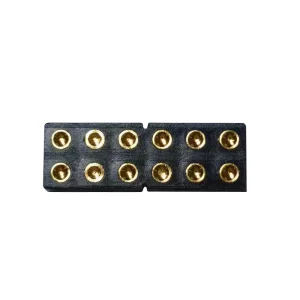
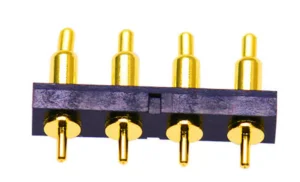
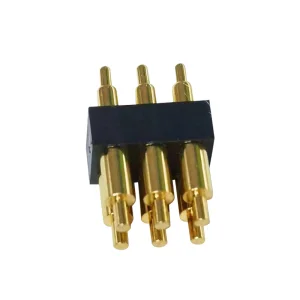
Explore our core engineering catalog, designed for testing reliability, dynamic high-frequency signals, and low-wear power interfaces.
In the modern electromechanical and electronic manufacturing ecosystem, product complexity increases logarithmically as device volumes shrink. Consumer micro-wearables, advanced driver assistance systems (ADAS) in Electric Vehicles (EV), and high-frequency telecommunication hardware operate at signal margins that demand absolute integrity. This is where Custom Test Solutions manifest as a core commercial and technological differentiator.
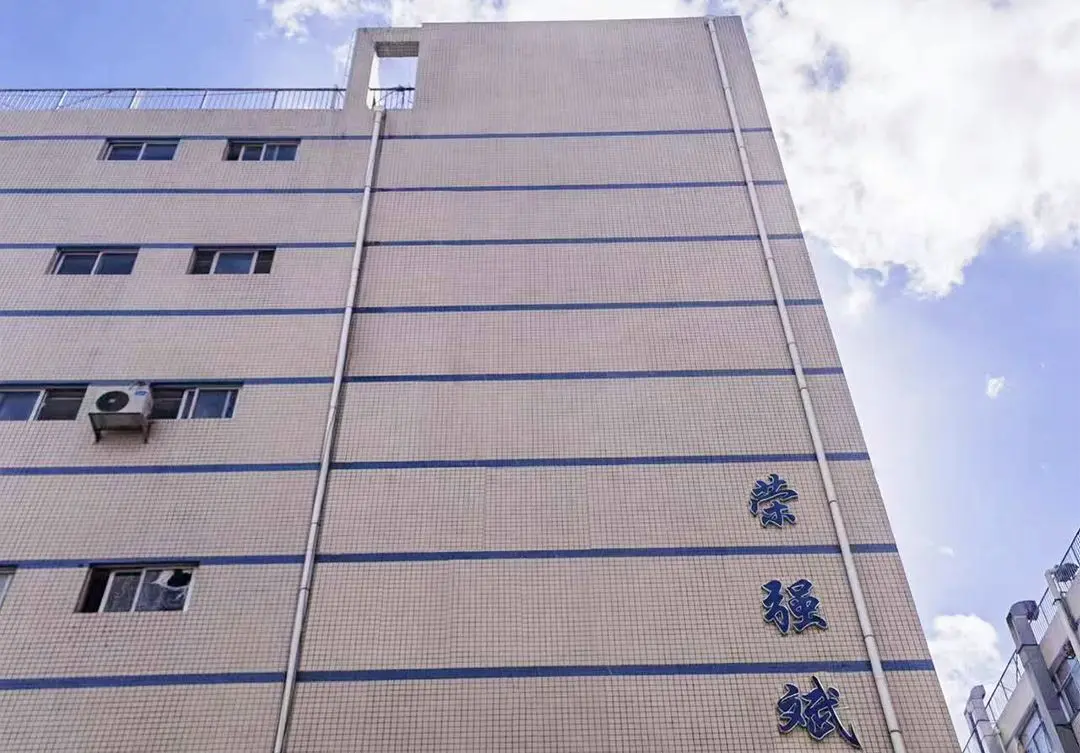
Shenzhen Rongqiangbin Electronic Hardware Co., Ltd., situated in Songgang Street, Shenzhen—the epicenter of the Guangdong-Hong Kong-Macao Greater Bay Area—has spent over a decade refining the mechanics and chemistry of Pogo Pin technology and electrical contact interfaces. Established in February 2011, our enterprise has progressed from a regional manufacturer to a global benchmark supplier, specializing in the micro-precision engineering of Spring Loaded Pogo Pin Connectors, magnetic coupling systems, and advanced contact arrays.
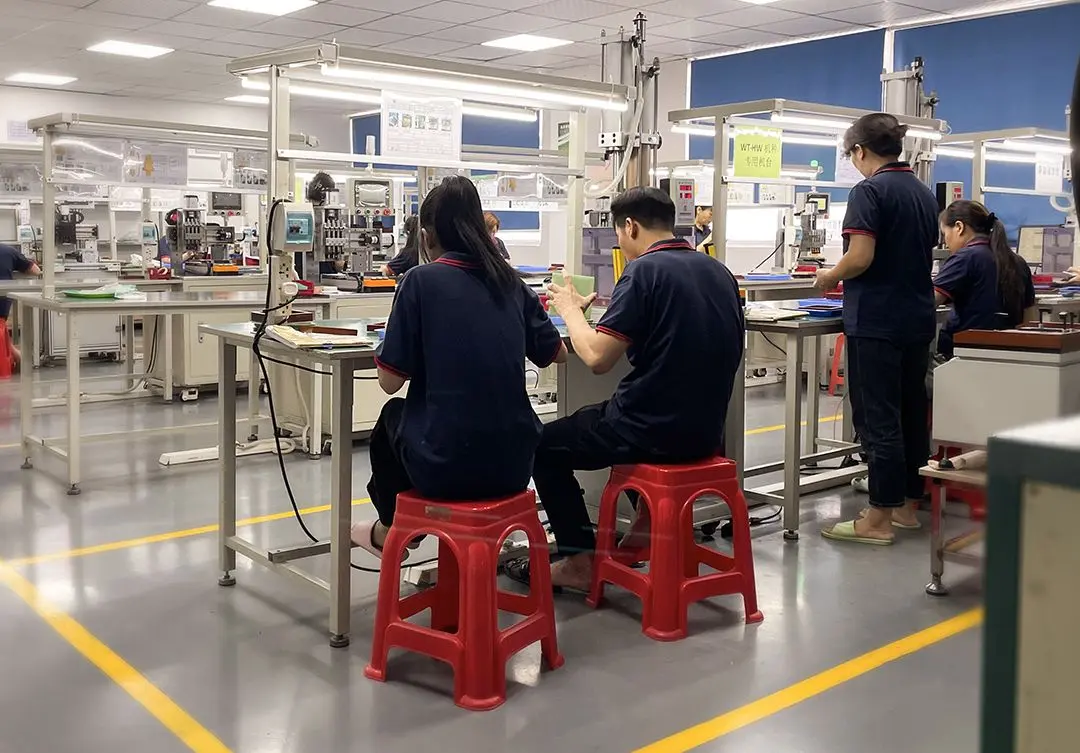
The global testing sector is undergoing a massive paradigm shift. Standard, off-the-shelf testing components fail to meet the tight pitch requirements (often sub-0.4 mm) and multi-gigahertz signal parameters of modern ICs and modular assemblies. The integration of 5G, Automotive Ethernet, and IoT architectures requires custom test solutions capable of millions of reliable actuations without signal distortion or mechanical fatigue.
When selecting a test interface partner, tier-one manufacturers must evaluate not just unit prices, but the total cost of quality (CoQ). Factors like contact resistance degradation, spring force fatigue, plating wear-through, and structural stability under extreme temperatures define the operational efficiency of production lines. A failure rate of even 0.01% in test components can cause bottlenecking, false-reject errors, and millions of dollars in losses.
"Our vision is to be the premier global destination for high-reliability, cost-optimized Pogo Pin designs and custom connection technologies, steering the evolution of precision electromechanical testing interfaces."
Backed by over a decade of empirical research, state-of-the-art testing equipment, and international system certifications.
Founded in 2011, Rongqiangbin holds over 300 patents and supports more than 4,000 global clients with custom connection architectures.
ISO9001:2015 certified quality systems. We maintain strict compliance with RoHS, REACH, and custom environmental directives.
Utilizing high-speed automated optical inspection (AOI), dynamic contact resistance testing, and load-stroke force profiling.
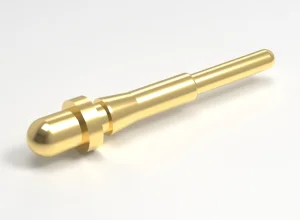
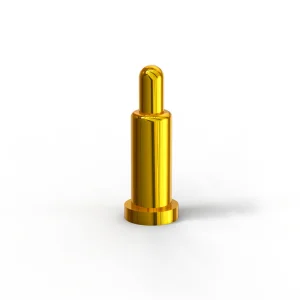
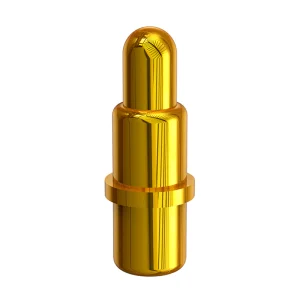
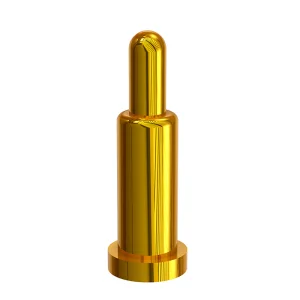
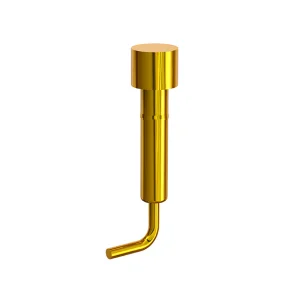
At the core of a custom test solution is the spring-loaded contact pin, or "pogo pin." While simple in concept, the physics of micro-contacts require advanced material science. A standard pogo pin consists of three elements: a plunger, a barrel, and an internal spring. In test environments, these elements face harsh electrical cycles, chemical pollutants, and physical wear.
The selection of base metals determines structural integrity and conductivity. The plunger is typically machined from brass (C3604) or beryllium copper (BeCu) alloys. BeCu is favored for high-reliability test probes because of its hardness and conductivity, especially when testing hard materials like tin, nickel, or steel leads. The barrel is usually made of brass or phosphorus bronze, which helps the internal components glide smoothly.
Untreated base metals oxidize quickly, increasing contact resistance. To prevent this, we apply a barrier layer of nickel (typically 50 to 120 micro-inches) followed by a top layer of gold (Au) ranging from 3 to 30 micro-inches, depending on the application. Gold provides excellent electrical conductivity and corrosion resistance. For high-volume production testing where sweep-wear is common, we use hard gold or proprietary palladium-cobalt alloys to prolong the life of the pin.
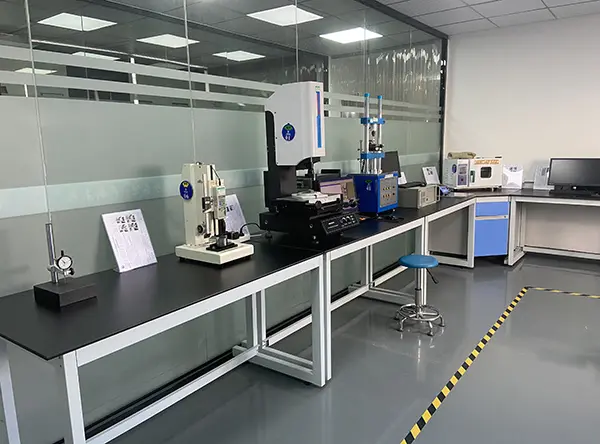
A critical metric of test solutions is dynamic contact resistance (C.R.). Throughout the contact stroke, C.R. must remain low and stable (typically under 30 milliohms). The spring must deliver consistent force—typically 30g to 150g depending on the pitch—to break through surface oxides and contaminants on the test piece without damaging it. Our testing lab uses specialized force-stroke-resistance profiling machines to verify that every design performs reliably under simulated operational lifecycles.
Different industries present unique engineering challenges. Our custom testing interfaces are tailored for specialized applications across several sectors:
Over the years, Rongqiangbin has partnered with major global enterprises. Our products support high-volume manufacturing lines for leading brands, demonstrating the quality and scale of our operations:
As microelectronics advance, testing demands grow. To keep pace with technology trends, Rongqiangbin invests in several R&D initiatives:
Find answers to common engineering questions regarding pogo pin design, material selection, and testing custom solutions.
Low and stable contact resistance (typically <30mΩ) is achieved through gold-over-nickel plating, spring force optimization, and internal plunger design. Angled plunger bases or internal ball/bias mechanisms force the plunger to make direct contact with the inner barrel wall, minimizing current pathways through the spring and preventing contact resistance spikes.
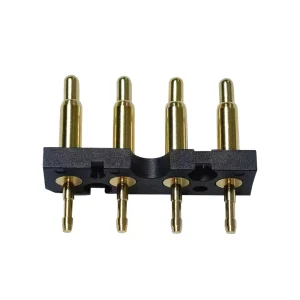
SMT pogo pins are designed with a flat base, allowing automated pick-and-place systems to mount them directly onto the PCB surface for efficient reflow soldering. This process reduces board space and eliminates the need for drilled holes. DIP pins, which have a pin extension that inserts through holes in the PCB, offer higher mechanical anchoring strength, making them ideal for heavy mating and manual connection applications.
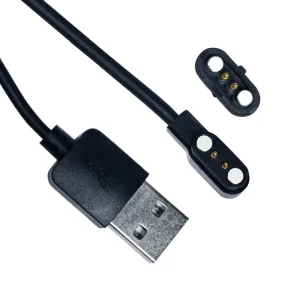
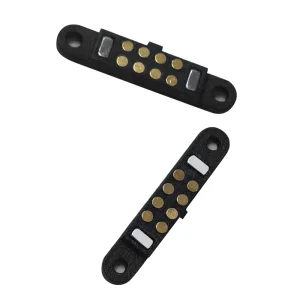
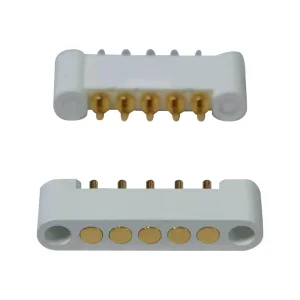
Magnetic pogo pin connectors use high-grade permanent magnets (typically N52 NdFeB) sized to match the required holding force. The mechanical housing features guiding slots or chamfers to ensure correct polarity and alignment. The magnetic force holds the connector in place, while allowing it to release safely without damaging the contacts if pulled abruptly.
Humidity, dust, sweat, and corrosive chemicals like sulfur can degrade contacts. We protect contacts by applying thicker gold plating, using corrosion-resistant base metals like stainless steel or BeCu, and sealing housings to IPX7 or IPX8 standards with liquid silicone rubber (LSR) overmolding.
Yes. We offer design support for custom housings, including engineering plastics like LCP, PBT, or Peek, and metal shells. Our production capabilities include precision CNC milling, high-speed turning, and plastic injection molding to meet specific dimensional and electrical requirements.
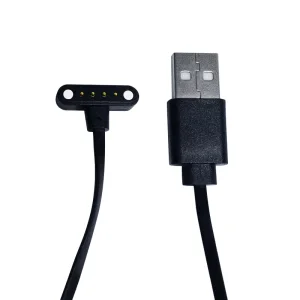
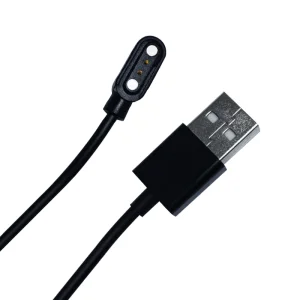
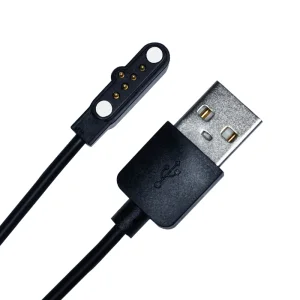
Explore our high-performance connectors, magnetic charging cables, and specialized adapters designed for automated testing environments.
 Rongqiangbin Electronic