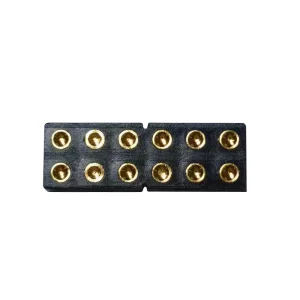
Custom 3 Pin Magnetic Connector Factory & Factories

Precision Engineering, Robust Connectivity, and High-Performance Custom Pogo Pin Solutions for Global OEMs & ODMs

Understanding 3-Pin Magnetic Connectors: A Deep Dive

In modern electronic device architecture, design criteria constantly push the boundaries of physical dimensions, ingress protection, and contact life. The demand for compact charging interfaces and dependable data synchronization has made 3-Pin Magnetic Connectors the design standard of choice for many applications. But what makes these components so reliable, and how do factories manufacture them to withstand harsh physical and environmental conditions?

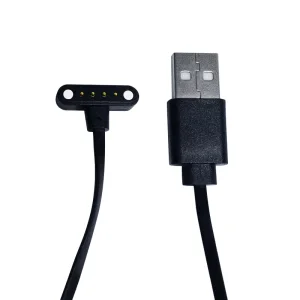
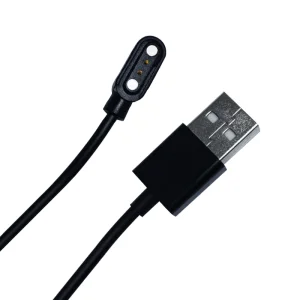
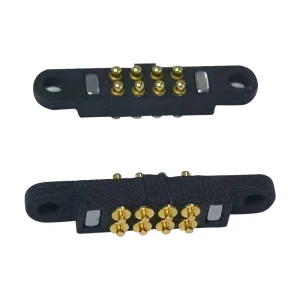
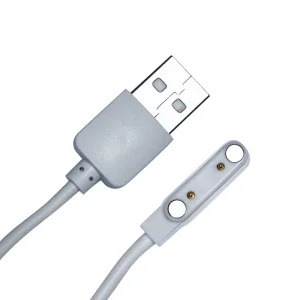
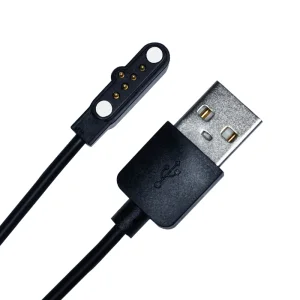
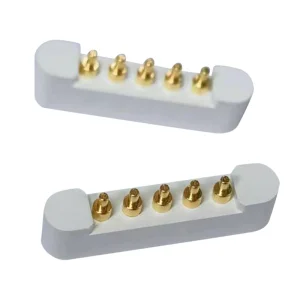
A standard 3-pin configuration typically contains a dedicated positive current pathway (VCC), a solid grounding mechanism (GND), and a central pin for data, system monitoring, or analog signal transmission. Unlike conventional micro-USB or USB-C designs which require physical friction interfaces and insertion alignment, a magnetic pogo-pin configuration utilizes powerful internal neodymium magnets to align, latch, and lock the connection. This design prevents mechanical wear, reduces user error, and supports sleek waterproof form factors.

10+
Years Experience
4,000+
Global Clients
300+
Patent Assets
100%
QC Inspection

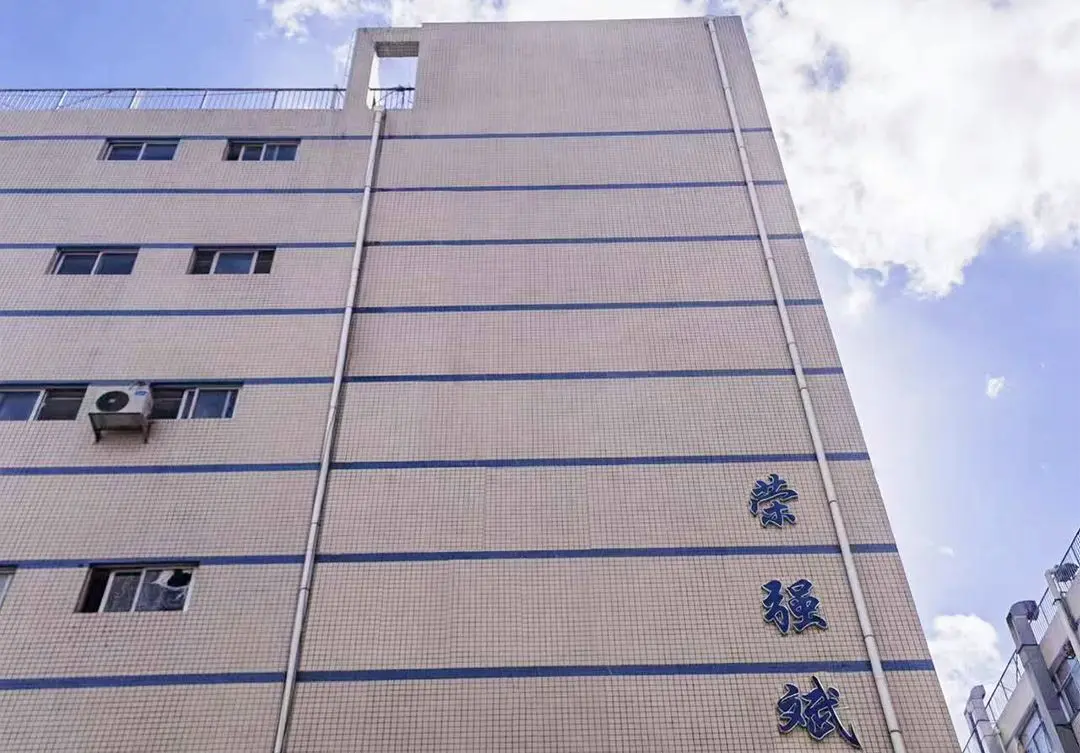
As a leading custom 3 pin magnetic connector factory, Shenzhen Rongqiangbin Electronic Hardware Co., Ltd. (founded in February 2011 in Songgang Street, Shenzhen) has built its legacy on high-precision pogopin connector design, advanced raw material sourcing, and thorough automated manufacturing controls. Through continuous engineering innovation, we help Tier-1 brands build durable charging interfaces that are corrosion-resistant, robust, and capable of operating under strict environmental regulations.

About Shenzhen Rongqiangbin Electronic Hardware Co., Ltd.

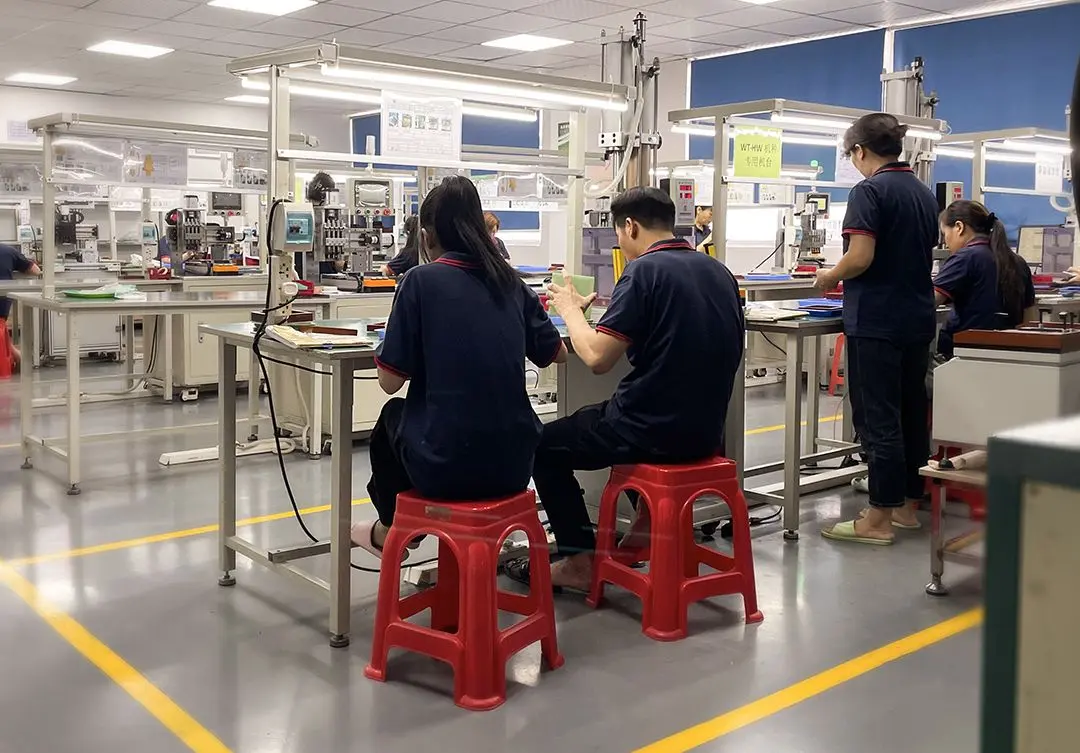
Established in the heart of China’s leading hardware and electronics manufacturing center—the Guangdong-Hong Kong-Macao Greater Bay Area—our facility has spent over a decade optimizing the R&D and mass fabrication of spring-loaded contacts and custom magnetic connectors.

Our facility maintains an ISO9001:2015 version international authoritative quality management system certification. Through rigorous training, internal audits, and investments in testing technology, we support a modern, comprehensive environmental management system that matches strict global compliance frameworks, including EU RoHS, REACH, and Halogen-Free directives.

Our core mission revolves around "customer first, integrity first." We have established deep, long-term strategic relationships with premier global OEMs and innovators, including Honeywell, Samsung, Siemens AG, ZTE, 360, QCY, Haylou, Shanghai Laimu, Luxshare Group, Aoni Electronics, and Amphenol Group. This portfolio illustrates our reliability to deliver under demanding design guidelines.
Why Sourcing from a Shenzhen-Based Custom 3 Pin Magnetic Connector Factory Matters

Deciding where to base your connector supply chain affects everything from prototype development speed to raw material costs and time-to-market. The Guangdong-Hong Kong-Macao Greater Bay Area, and specifically Songgang, Shenzhen, provides several structural benefits that help businesses maintain high efficiency:

Complete Supply Chain Ecosystem
Every step of production, including brass turning, precision injection molding, magnet sintering, dynamic electroplating, and structural modeling, is located within a 10-kilometer radius. This high density of suppliers keeps raw material logistics fast and affordable.
Advanced Customization Speeds
Our engineers can turn a custom 3D drawing of a 3-pin magnetic housing or interface mold into functional, physical prototypes within 5 to 7 business days, shortening validation cycles.
Automated Quality Controls
We use high-speed automated sorting machines, force-deflection testers, and optical coordinate measurements to inspect each contact pin. Automated verification keeps error rates low even during high-volume production.

Technical Specifications and Design Parameters

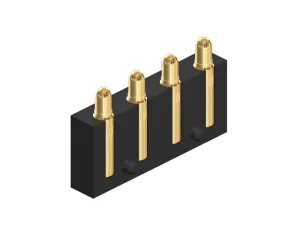
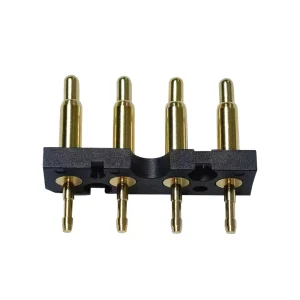
Building custom connectors requires balancing electrical requirements and mechanical constraints. Our 3-pin interfaces use spring-loaded contacts (Pogo Pins) and a magnetic shell to deliver reliable conductivity and high mating cycles.

Performance Indicator Standard Specification High-Spec Custom Limits Testing Methods / Compliance
Current Rating 1.0A to 3.0A Continuous Up to 10.0A per Pin Temperature Rise Analysis (≤30°C rise)
Contact Resistance ≤ 30 mΩ ≤ 15 mΩ 4-wire Kelvin resistance measurement
Voltage Rating 12V DC 36V DC Dielectric withstanding voltage test
Magnetic Holding Force 300g to 600g Over 1200g (High Retention) Digital Force Gauge Extraction Profile
Mating Durability 10,000 Cycles 100,000 to 1,000,000 Cycles Automated Mechanical Life Cycle Tester
Ingress Protection (IP) IP54 Dust/Splash Proof IP67 / IP68 Submersion Pressure leak testing & vacuum sealing
Salt Spray Resistance 48 Hours (Neutral Salt Spray) 96 to 168 Hours (Corrosive environments) ISO 9227 & ASTM B117 salt fog testing

Material Selection: The Core of Connector Reliability

The longevity of a magnetic charging or data connector depends on the quality of its plating and raw materials. In our manufacturing process, we rely on premium metals and engineered plastics:

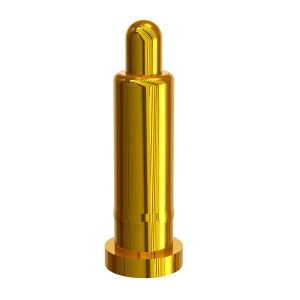
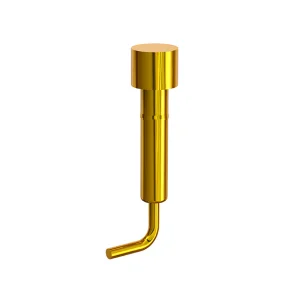
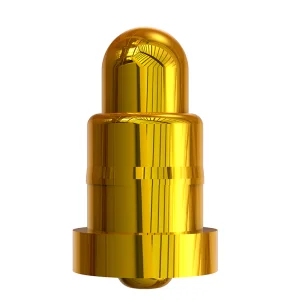
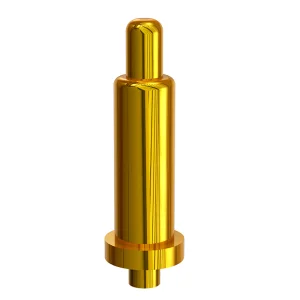
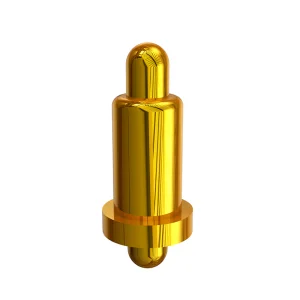
  • Plunger and Barrel: We source high-grade free-cutting brass (C3604) or lead-free copper alloys. The plunger is precision-machined to ensure smooth sliding and prevent wear on the internal spring.
  • Internal Spring: We use music wire (SWP) for cost-efficiency or stainless steel (SUS304) and Beryllium Copper (BeCu) for high-cycle applications. Stainless steel provides excellent corrosion resistance and force retention at high temperatures.
  • Plating Specifications: Standard plating starts at 3 micro-inches (μ") of gold (Au) over 50μ" to 100μ" of nickel (Ni). For harsh wear and tear, we offer thick gold plating up to 30μ" or specialized palladium-nickel (Pd-Ni) coatings to prevent sweat corrosion.
  • Permanent Magnets: We use sintered Neodymium-Iron-Boron (NdFeB) magnets, typically N52 grade, nickel or epoxy-coated to prevent degradation from exposure to moisture and skin oils.

Localized Application Scenarios and Industry Solutions

A 3-pin magnetic interface can serve multiple functions: power, ground, and communication. This combination works well across several industries, solving common connection challenges.

Smart Wearables & Audio
Modern smartwatches, fitness trackers, and TWS (True Wireless Stereo) earbud cases require small, waterproof charging connectors. Our low-profile 3-pin systems use shallow mating designs, allowing developers to keep housings slim while maintaining sweat-resistant, IP68 connections.
Portable Medical Electronics
Handheld diagnostic equipment, patient monitors, and smart home-health aids require cleanable, reliable connections. A magnetic breakaway interface prevents damage to the unit if a user trips over the cord and allows medical staff to clean the device easily.
Industrial IoT & Charging Docks
Industrial terminals, barcode scanners, and GPS asset trackers use charging cradles that require constant docking. A 3-pin connector handles continuous mechanical cycles, while a dedicated third pin transmits serial data for system updates.

Key Factors to Consider When Sourcing Custom Connectors

Industrial procurement managers, component engineers, and supply chain directors need custom connectors to meet strict criteria. When evaluating custom connector factories, focus on these five key metrics:

  1. Design Flexibility and CAD/CAE Support: The manufacturer should offer complete modeling support, including structural CAD integration and magnetic field FEA simulation, to confirm polarities align correctly before cutting molds.
  2. Dynamic Electrical and Mechanical Testing: Ensure the factory provides life-cycle testing, contact resistance tracking, dynamic thermal imaging under load, and comprehensive salt fog testing.
  3. Environmental Compliance: Verify the supplier provides material data sheets (MDS) confirming compliance with RoHS, REACH, and California Proposition 65.
  4. Automated Sorting and AOI Inspection: Ask if the factory uses Automated Optical Inspection (AOI) to check housing dimensions, pin height, and surface finish at scale.
  5. Flexible Tooling Options: For small and medium production runs, seek a factory that offers cost-effective prototype tooling to validate the design before investing in full-scale production.

At Shenzhen Rongqiangbin, our engineering team manages the complete manufacturing process under one roof, from initial concepts to final validation. This integrated model provides consistent quality and keeps production timelines predictable.

Frequently Asked Questions (FAQ)

1. What is the typical lead time for a custom 3-pin magnetic connector prototype?
For initial prototypes, our standard lead time is 5 to 7 working days once the 2D/3D CAD drawings are approved. Mass production tooling and first-article inspections (FAI) generally take 15 to 20 business days, depending on the complexity of the plastic injection housing and magnetic structure.
2. How does the factory prevent corrosion from sweat or salt spray?
We use specialized, thick electroplating, applying up to 30 micro-inches of gold over a nickel underplate. We also offer advanced plating alternatives like Palladium-Nickel (Pd-Ni) or rhodium, which are highly resistant to moisture, salt spray, and human sweat.
3. Can a 3-pin configuration support USB 2.0 data communication?
Yes. A 3-pin connector can support power (VCC), ground (GND), and a single-ended signal path. However, full USB 2.0 data requires a D+ and D- pair along with power and ground, which typically requires 4 pins. A 3-pin design can be configured for power and custom TX/RX serial communications or simple diagnostic signals.
4. What certifications does your factory hold for international markets?
Shenzhen Rongqiangbin holds ISO9001:2015 quality management system certification. All of our products comply with RoHS and REACH standards. We can also coordinate CE, FCC, UL, and other product-level certifications through partner laboratories.
5. How do you design magnetic polarities to prevent incorrect connections?
We use asymmetrical magnetic layouts and polarities (pairing North and South poles). This design ensures that if a user attempts to plug the connector in backward, the magnets repel each other, preventing incorrect connections and protecting the circuitry.