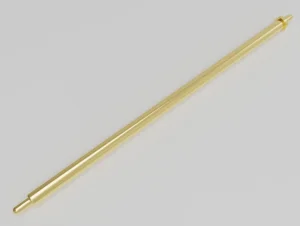
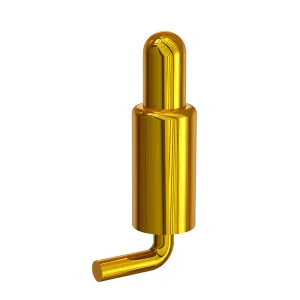
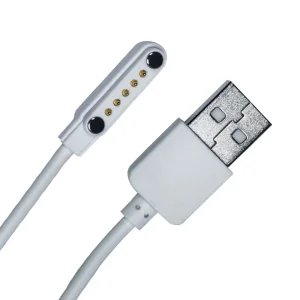
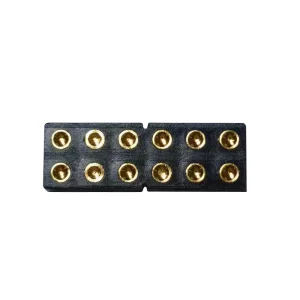
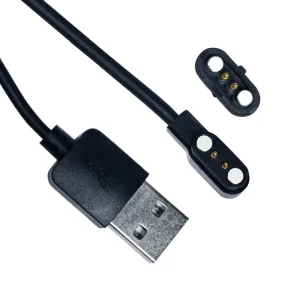
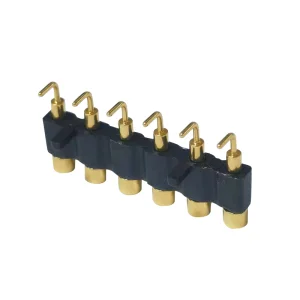
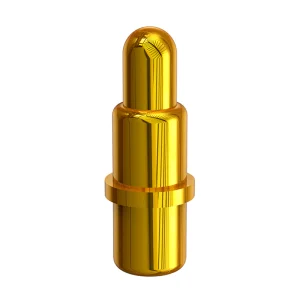
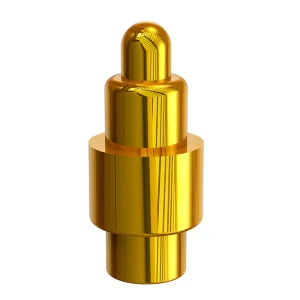
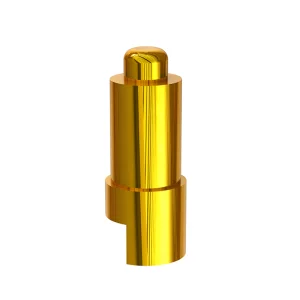
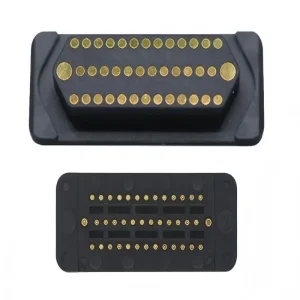
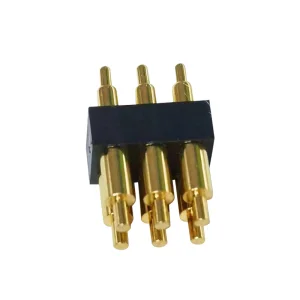
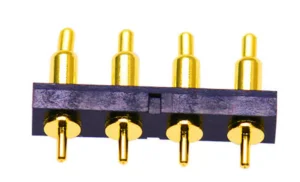
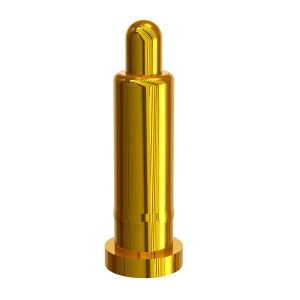
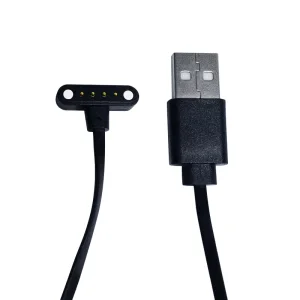
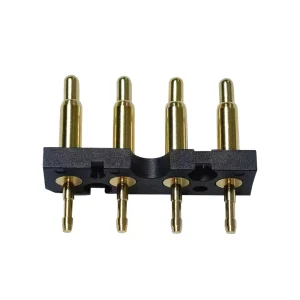
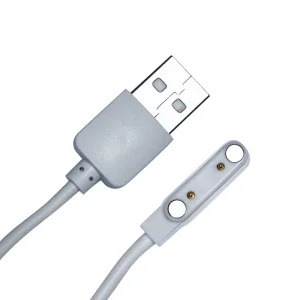
Explore our top-performing custom pins, single-row connectors, magnetic cables, and charging modules engineered for reliability, durability, and superior current transfer.
Bridging standard high-speed protocols with ultra-durable, quick-release mechanical interfaces for mission-critical hardware deployments.
Standard Type-C connectors often reach thermal limits during continuous high-load transmission. By translating USB-C power delivery (PD) lines into custom engineered high-current pogo pins, we bypass internal resistance bottlenecks. Our plungers feature custom internal structures (ball-point, bias-cut, or hollow) paired with high-durability stainless steel or beryllium copper springs to maintain continuous contact pressure. We comfortably support currents ranging from 2A up to 15A per pin with less than a 30°C temperature rise, reducing thermal strain on device logic boards.
Translating USB 2.0 (480 Mbps) and USB 3.1 Gen 1/Gen 2 (5-10 Gbps) high-speed differential signal pairs through a spring-loaded system requires careful impedance matching. Our design processes involve finite element analysis (FEA) to calculate the precise distance, material dielectric constant of the housing (LCP or HTN), and pin length to achieve a nominal impedance target of 90Ω ± 15Ω. By deploying specific shielding pins and utilizing twisted coaxial wire terminations inside our overmolded USB-C connectors, we keep signal crosstalk and attenuation to an absolute minimum.
Environmental variables pose a threat to electrical conductivity. We apply proprietary thick-gold plating (typically 3u" to 50u" gold over nickel barrier layers) on our plungers, barrels, and targets to combat oxidation. In demanding wearable or maritime applications exposed to sweat and saline spray, we employ composite plating like Platinum-Cobalt or Palladium-Nickel to guarantee high chemical resistance. This design ensures contact resistance remains stable under 30 mΩ over the entire mechanical lifecycle of the product.
Unlike standard female USB-C sockets which easily collect lint, dirt, and moisture, pogo-pin contact plates are flat, easy to clean, and hermetically sealable to IPX8. When coupled with magnetic mechanical alignment, they deliver a user-friendly, zero-force mating interface that protects internal electronics from physical plug damage.
| Parameter / Specification | Standard Pogo Pin Configuration | High-Current USB-C to Pogo Variant | Testing Standards & Methodologies |
|---|---|---|---|
| Rated Current | 1.0A - 2.0A Continuous | 3.0A - 15.0A (Custom Plunger designs) | EIA-364-70 (Temperature Rise vs. Current) |
| Contact Resistance | < 50 mΩ (Nominal stroke) | < 20 mΩ (Standard bias-cut design) | EIA-364-23 (Low Level Contact Resistance) |
| Mechanical Cycle Durability | 10,000 to 50,000 cycles | 100,000 to 1,000,000 cycles | EIA-364-09 (Durability Testing) |
| Spring Force Customization | 30g - 60g ± 15g | 60g - 150g ± 20g (Application specific) | Force-Stroke Curve Profiling |
| Plating Composition | Gold plating 1u" - 3u" over Nickel | Gold plating up to 50u" or Pd-Ni alloy | ASTM B117 (Salt Spray Testing 48h to 96h) |
| Environmental Rating | IP54 Equivalent | IPX7 / IPX8 hermetic sealing | IEC 60529 Water Ingress Testing |
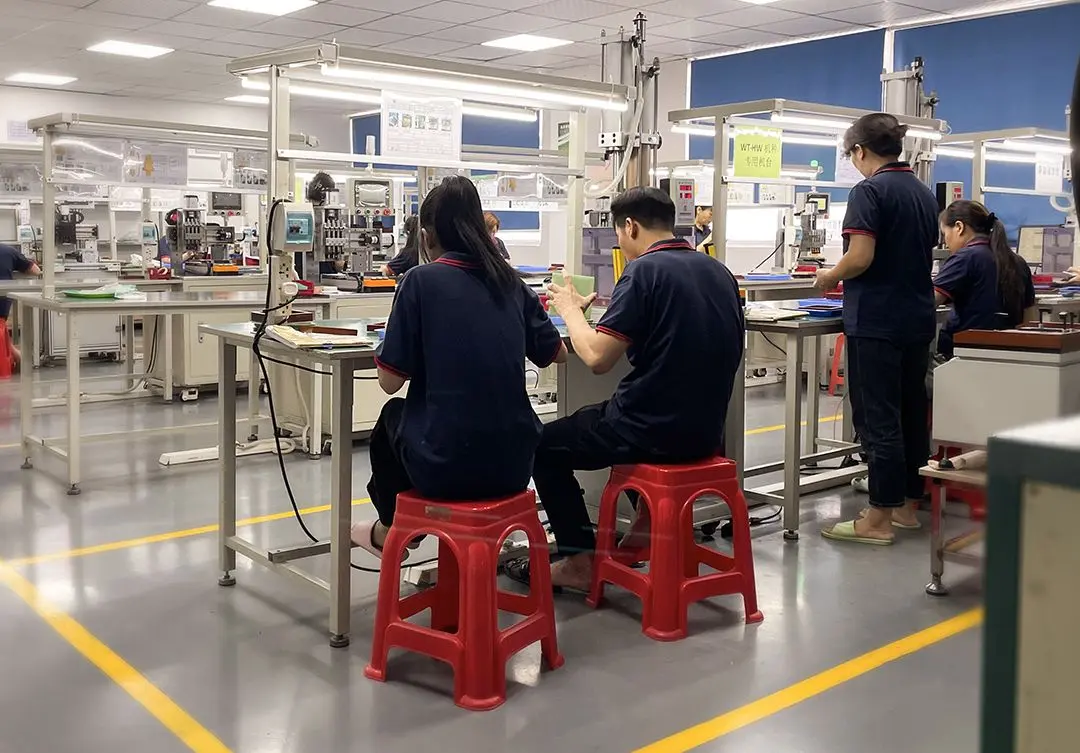
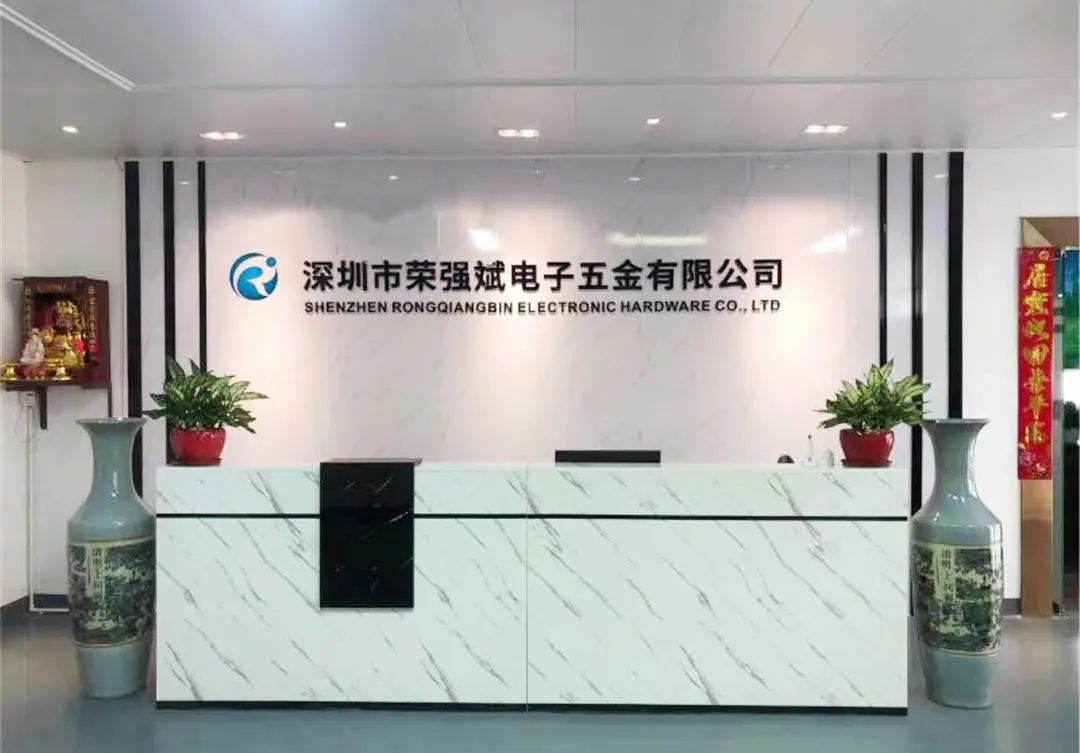
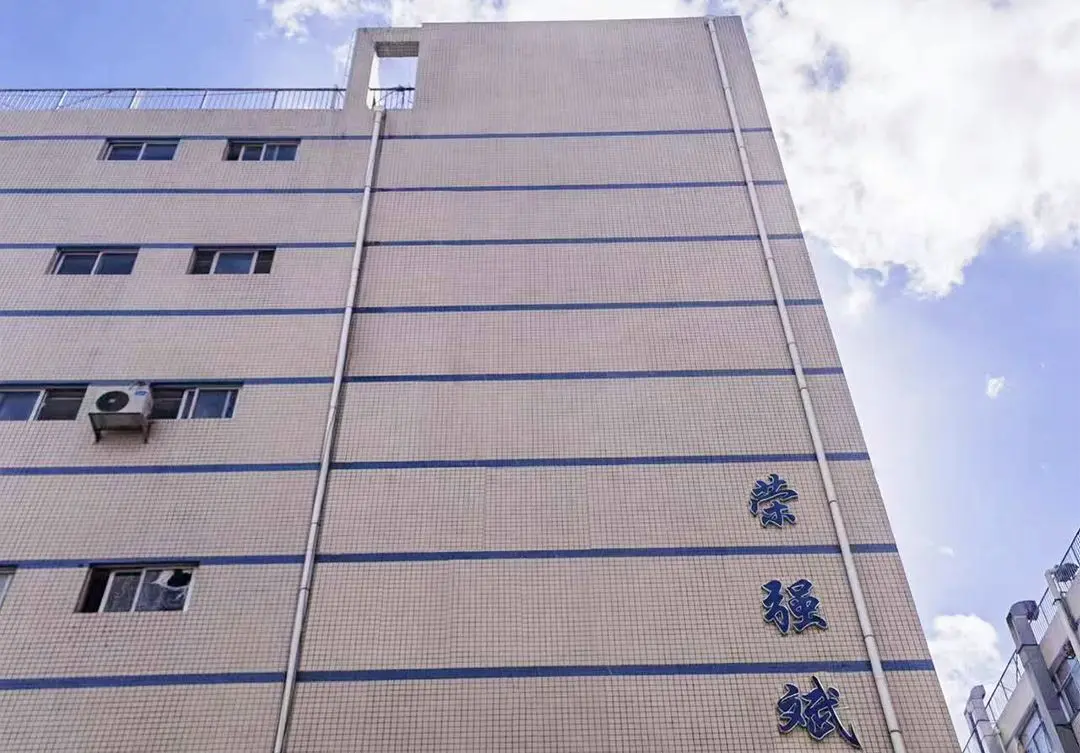
Shenzhen Rongqiangbin Electronic Hardware Co., Ltd. is located in Shenzhen, the leading technology and industrial manufacturing hub of the Guangdong-Hong Kong-Macao Greater Bay Area. Founded in February 2011 on Songgang Street, Shenzhen, our company has dedicated over a decade to the R&D, structural design, and precision manufacturing of high-performance POGO PIN connectors and their associated cable assemblies.
Through continuous technical refinement, capital investments in automated production, and rigorous engineering methodologies, we have grown into a reliable global connector supplier. We maintain full vertical integration—from precision CNC lathe turning, internal spring manufacturing, and plastic injection molding, to automated visual inspection and hermetic environmental sealing.
Our core corporate value is built on raw performance, mechanical reliability, and customized engineering. We partner with product design teams early in the development lifecycle to provide DFM (Design for Manufacturability) analysis, ensuring standard prototypes transition smoothly into large-scale, automated manufacturing runs.
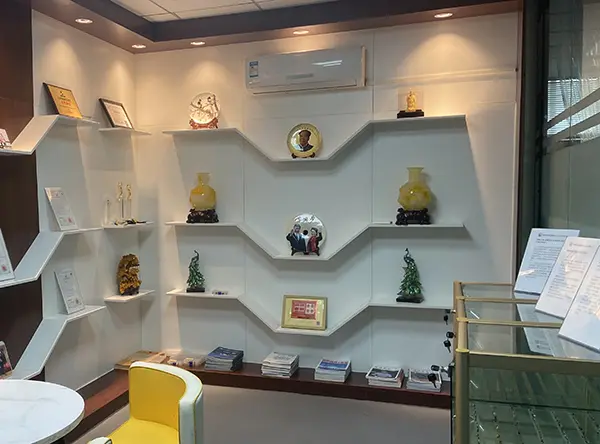

Our corporate spirit values "customer first, integrity first." Armed with a specialized POGO PIN technical design and manufacturing group, we build reliable, long-term partnerships with customers worldwide. We provide environmentally compliant connectors designed to stand up to heavy daily use.
How engineers apply USB-C to Pogo Pin connectivity across consumer, medical, automotive, and industrial domains.
For smartwatches, fitness bands, and TWS earbud charging cradles, conventional USB-C ports present mechanical packaging challenges. Custom 2-pin and 4-pin magnetic pogo pin charging assemblies require minimal enclosure depth. The configuration keeps the device chassis water-resistant (IP68) while handling typical 5V, 1A to 2.1A charging currents safely.
Rugged data collection devices, POS barcode scanners, and marine navigation tablets require frequent docking throughout the day. Standard USB-C connectors can wear out or become damaged in these scenarios. Magnetic or mechanical pogo pin arrays handle hundreds of daily insertion cycles while maintaining stable connectivity in high-vibration environments.
Handheld ultrasound scanners, pulse oximeters, and patient monitoring devices require flat, non-porous exterior housings for reliable sterilization. Spring contacts sit flush with the enclosure surface, leaving no recess to harbor bacteria. Their gold-plated surfaces tolerate direct chemical wipe-downs using isopropyl alcohol solutions.
Modern device engineering demands smaller footprints and higher power outputs. To support this progression, we continue to refine our connector technologies with three main goals in mind:
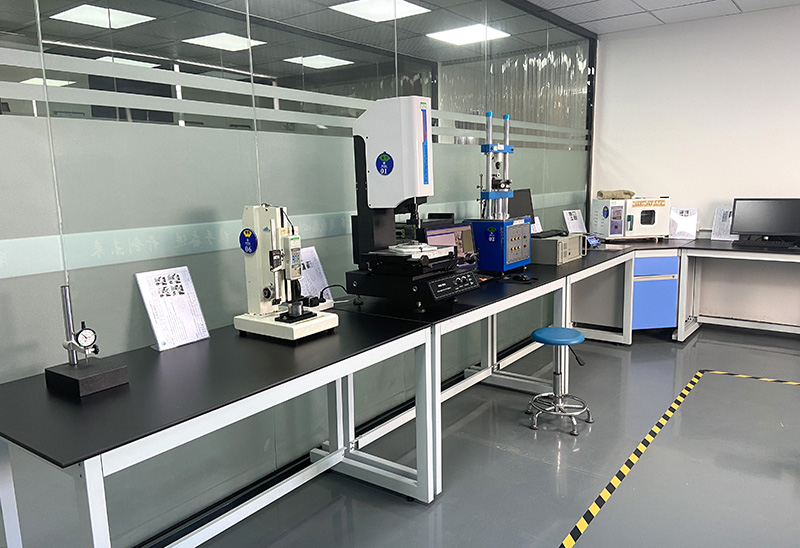
Operating directly out of Shenzhen allows us to optimize raw material sourcing, automated machining, and international logistics.
By executing precision CNC turning, pin assembly, injection molding, and dynamic testing in-house, we eliminate third-party logistics delays. This direct control over production schedules helps protect against raw material price swings and maintains traceablity down to the rod-metal batch.
Our engineering team delivers 2D and 3D CAD drawing files within 48 hours of initial review. We can produce custom tooling and deliver functional evaluation prototypes within 7 to 14 working days, accelerating your project's time-to-market.
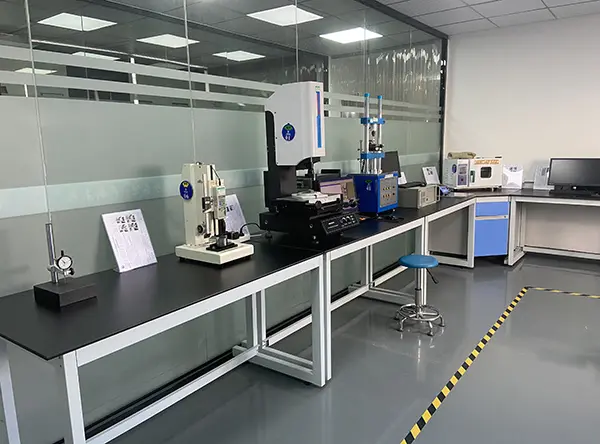
Our quality management workflow follows critical path checks, including incoming raw material analysis, in-process optical measurements, and final cycle-force-resistance profiling. Each shipment is documented with an official factory testing certificate.
Answers to common technical, material, and electrical questions from product developers and system engineers.
Standard USB-C ports utilize small receptacle contacts with limited surface areas, typically restricting current to 3A or 5A. Our custom-designed high-current pogo pins feature thicker plunger walls and low-resistance internal copper pistons. This configuration allows a single spring pin to continuously transmit up to 15A of current without exceeding safe temperature margins.
For products exposed to sweat, humidity, or saline spray, we recommend a plating thickness of at least 10u" to 30u" of gold (Au) over a stable nickel (Ni) barrier. In extreme environments, we utilize specialized coatings like Palladium-Nickel (Pd-Ni) or Platinum (Pt) to prevent galvanic corrosion and prolong the spring contact's service life.
We maintain signal integrity by carefully matching physical impedance. Using simulated field solvers, we optimize the pin-to-pin pitch, housing plastic dielectric constant, and internal wire termination methods to meet the 90-ohm differential impedance standard. This ensures robust data transmission for USB 2.0 and USB 3.1 protocols.
Generally, we deliver initial CAD drawings in 2 days. Prototype samples are completed in 7 to 10 days. Once the design is validated and signed off by your engineering team, mass production tooling and initial product runs typically take 2 to 3 weeks.
Browse our comprehensive selection of spring contacts, DIP/SMT sockets, magnetic connectors, and keyboard interfaces.
 Rongqiangbin Electronic