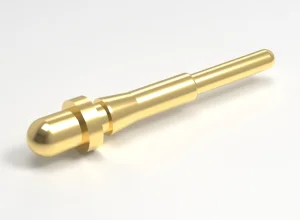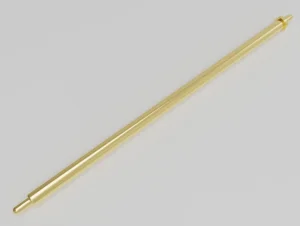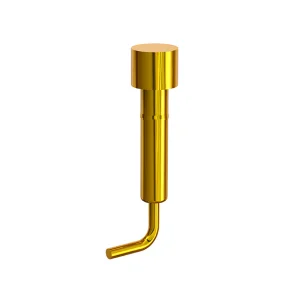
High Frequency Testing Needle Manufacturers & Factories Serving Berlin

High-precision Coaxial RF Probes, Spring Pogo Pins, and Specialized Magnetic Connectors Optimized for Automotive Radar, Semiconductors, and IoT Industries in Berlin.

Send Inquiry Now

The Imperative of High-Frequency Testing in Microelectronics

As microelectronics technologies race toward higher frequencies and smaller dimensions, the demands placed on electronic testing subsystems have grown exponentially. High-frequency testing needles (often referred to as RF test probes or spring-loaded coaxial pins) are the key components interface between the device under test (DUT) and automated test equipment (ATE). At frequencies exceeding 6 GHz—extending into the millimeter-wave (mmWave) spectrum—signal degradation due to impedance mismatch, insertion loss, and return loss becomes a dominant source of error.

Modern applications like 5G infrastructure, vehicle-to-everything (V2X) communication, autonomous driving radar, and advanced computing units require extremely clean test channels. Manufacturers must control parameters such as concentricity, plunger material density, and surface plating thicknesses down to sub-micron scales. Without precision engineering, high-frequency signals suffer from reflections, crosstalk, and thermal dissipation, rendering measurement data unreliable.
"To achieve accurate test results above 12 GHz, a test needle is not simply a piece of conductive wire; it is a meticulously matched transmission line that must exhibit consistent characteristic impedance."

Critical Signal Integrity Parameters

  • Impedance Match: Controlled 50 Ω ± 2 Ω matching to eliminate signal bounce and preserve waveform shape.
  • Insertion Loss (S21): Minimized attenuation across target bands (e.g., < 1.0 dB up to 26.5 GHz).
  • Mechanical Lifespan: Hardened spring designs capable of surviving over 500,000 compression cycles.
  • Contact Resistance: Less than 30 mΩ initial resistance for precise current measurement.
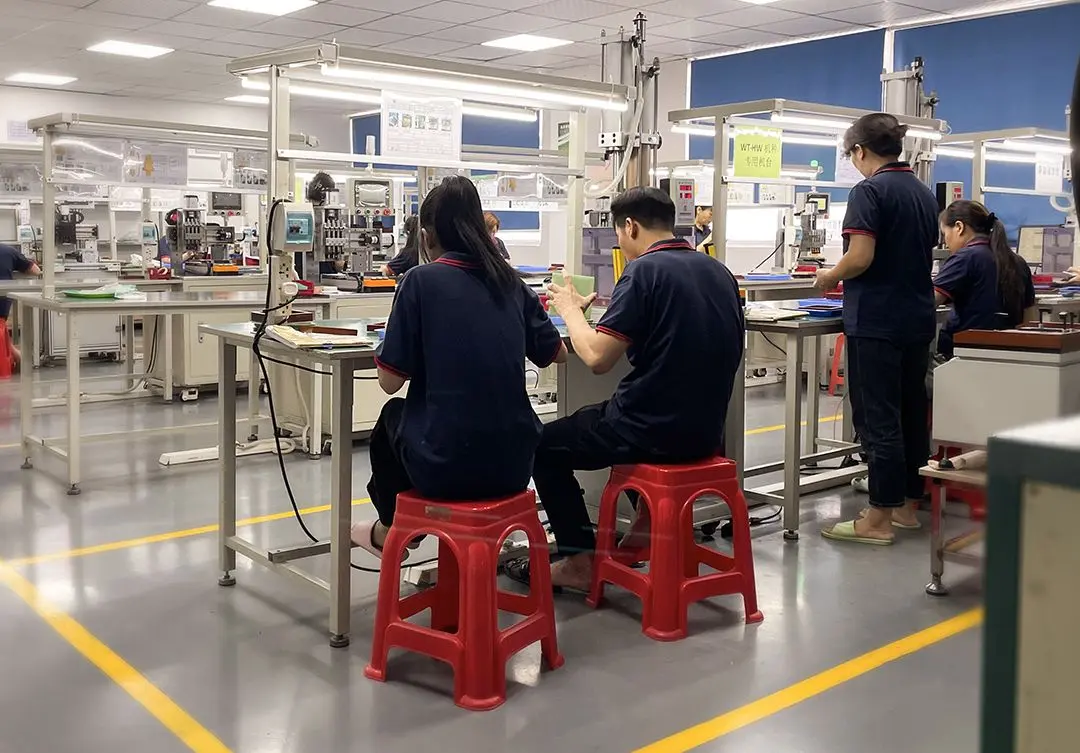
Production facility showing advanced CNC machinery

Serving Berlin's High-Tech and Automotive Ecosystem

Berlin-Brandenburg has evolved into one of Europe's premier industrial and technological clusters. The region is home to world-renowned innovation parks like Adlershof Science and Technology Park, major operations of engineering giants like Siemens AG, and massive new investments in electromobility (such as the Gigafactory Berlin-Brandenburg). These entities require robust supply chains for high-speed automated electronics testing, silicon wafer verification, and electronic control unit (ECU) validation.

For instance, automotive radar sensors operating in the 77–81 GHz band are manufactured and tested locally in the Berlin area. Testing these millimeter-wave devices requires custom-designed, extremely high-frequency coaxial probes. Similarly, medical technology innovators based in Berlin rely on high-precision spring contact pins to guarantee data integrity in life-saving diagnostic systems. By bridging Shenzhen's rapid manufacturing capabilities with Berlin’s strict engineering standards, we supply high-performance testing needles that seamlessly integrate into German production lines, meeting all CE and VDE quality expectations.

Global RF Testing & Semiconductor Trends

Adapting to miniaturization, high current demands, and advanced packaging technologies.

Extreme Miniaturization

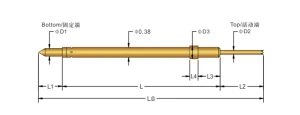
As board layouts compress, testing pin pitch sizes have shrunk from 1.27mm down to 0.4mm, and even 0.2mm. Precision machining must deliver micro-pins that maintain structural integrity without buckling under compression.

High-Speed Data (5G & IoT)

Millimeter-wave testing demands coaxial architectures inside the probe holder to shield high-frequency signals from external noise, enabling flawless testing of IoT components and RF front-end modules.

Automotive High-Current Probing

Modern electric vehicles (EVs) require high-current charging and battery system validation. Hybrid pogo pins combine standard RF signal transmission with heavy-duty power lines to optimize multi-pin connector sockets.

Standard Coaxial High-Frequency Probe Technical Map

Probe Model Type Frequency Range (GHz) Characteristic Impedance (Ω) Spring Force at Recommended Travel Materials & Plating
RF-Coaxial Series 040 DC to 6 GHz 50 Ω 0.8 N (80g) BeCu Plunger, Gold Plated; Steel Spring
RF-Coaxial Series 080 DC to 18 GHz 50 Ω 1.2 N (120g) BeCu Plunger, Rhodium Plated; Stainless Steel Spring
High-Freq Precision 100 DC to 40 GHz 50 Ω 1.5 N (150g) Hardened BeCu, PVD Gold Coating; High-durability Alloy Spring
High-Current Hybrid Probe DC to 1 GHz (Signal) / 30A (Power) - 2.5 N (250g) Tellurium Copper, Heavy Gold Plating; Music Wire Spring

The Custom Engineering Process: From Blueprint to Berlin Production Lines

Off-the-shelf testing solutions rarely meet the intricate specs of next-generation hardware designs. Our engineering flow emphasizes close collaboration. We design probe tips to match the topology of our customer's PCB pads or IC bumps, preventing damage (witness marks) on the contact surface while securing low contact resistance.

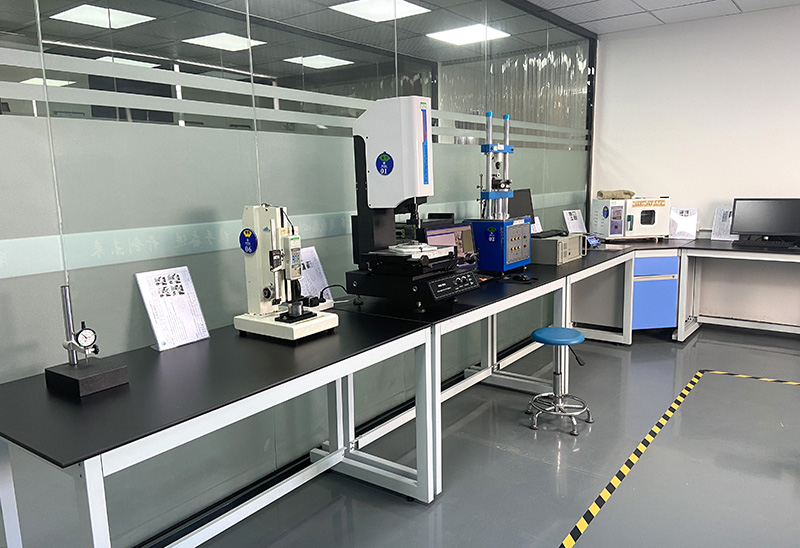
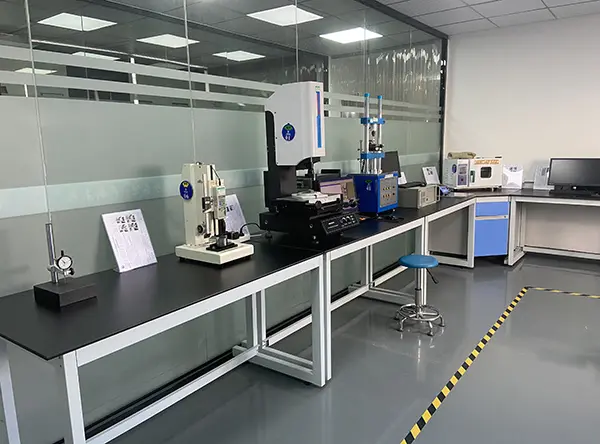
By simulating mechanical stresses and electromagnetic fields via advanced Finite Element Analysis (FEA), we identify potential hotspots, stress failure points, and impedance spikes prior to manufacturing. This minimizes prototyping iterations and accelerates lead times. Every shipment bound for Berlin undergoes rigorous testing—including 3D profile measurement, spring force analysis, plating thickness validation (X-ray fluorescence), and network analyzer RF verification—guaranteeing 100% reliability upon arrival.

Quality inspection of electronics components
10+
Years Experience
4000+
Global Clients
300+
Patents Held
100%
Pre-Shipment Inspection
Rongqiangbin Logo

About Shenzhen Rongqiangbin

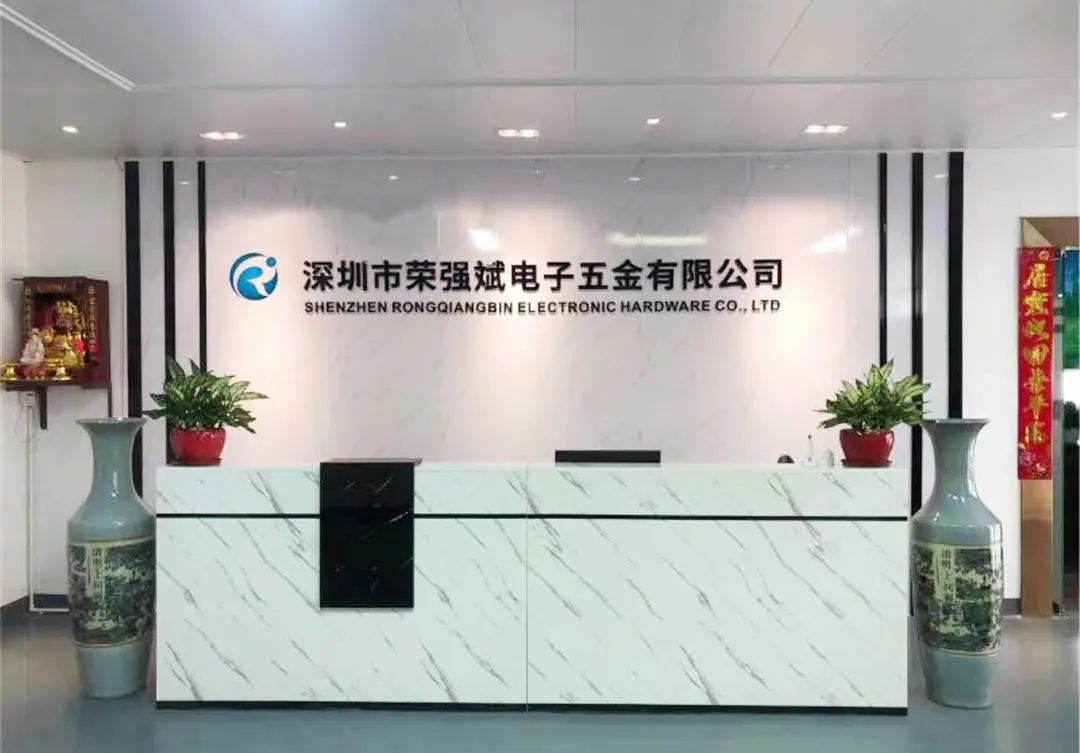
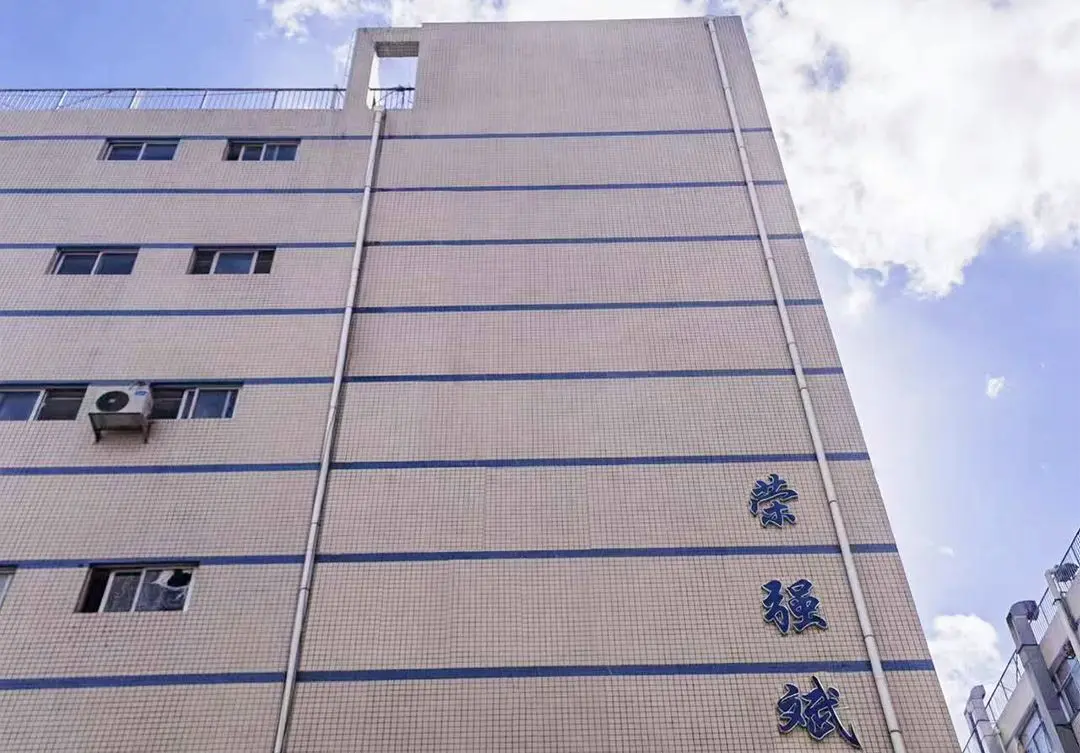
Shenzhen Rongqiangbin Electronic Hardware Co., Ltd. is located in Shenzhen, the leading city of Guangdong-Hong-Kong-Macao Greater Bay Area. Our company was founded in February 2011 in Songgang Street, Shenzhen, specializing in the development and manufacturing of Pogopin connectors, magnetic connectors, and high-frequency testing components. After years of efforts and sedimentation, the company gradually became an authoritative leader in the hardware and connector testing industry.

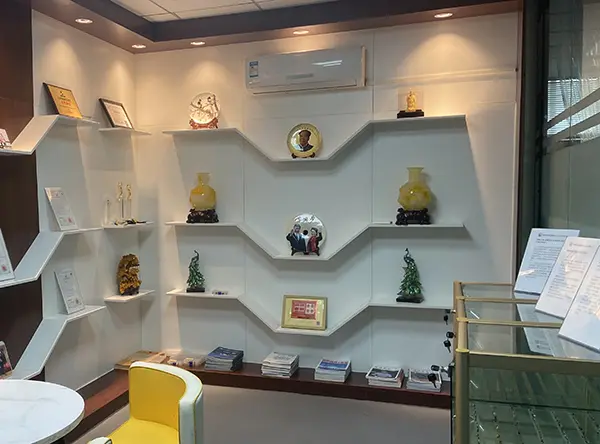
Guided by the principle of "customer first, integrity first," our strong R&D team works in lockstep with international clients to design and execute custom test setups. We are fully certified to the ISO9001:2015 international quality management system standards. Our extensive testing laboratories ensure we consistently meet environmental regulations (RoHS, REACH) and precision performance metrics.

Our Vision: Committed to being an excellent POGO PIN manufacturer for both quality and cost on home and abroad, and leading connector technology development.
Rongqiangbin Headquarters
Trusted by Global Leaders

We partner with prominent enterprises including Honeywell, Samsung, SIEMENS AG, ZTE, 360, QCY, HAYLOU, Shanghai Laimu, Luxshare Group, Aoni Electronics, Amphenol Group, and other well-known industry leaders.

Expert Q&A on High-Frequency Testing Needles

Get detailed engineering answers regarding high-speed and high-frequency testing configurations.

What features are essential for a test needle to be classified as "high-frequency"?

To handle high-frequency signals (above 1 or 2 GHz), a test needle must feature a shielded coaxial structure where the center signal conductor is insulated from an outer grounding shield. This coaxial design prevents EMI (Electromagnetic Interference) and matches the standard 50-ohm characteristic impedance of the RF test equipment, minimizing signal reflections (measured as return loss, S11).

How does plating material affect the performance and lifespan of testing needles?

The plunger's base material is typically Beryllium Copper (BeCu) for its mechanical strength and conductivity, coated with hard Gold (Au) or Rhodium (Rh). Gold offers excellent electrical conductivity and resistance to oxidation, keeping contact resistance low. Rhodium provides superior hardness and wear resistance, suited for high-cycle automated testing environments where contact surfaces face high friction.

Can you provide custom test needle pitches for proprietary IC testing sockets in Berlin?

Yes. We design and manufacture custom pogo pins down to a 0.2mm pitch. Our engineering team can work directly from your PCB layout files (Gerber/CAD) to design specific plunger tip geometry, spring forces, and mounting structures. This is ideal for specialized medical equipment, R&D labs, and micro-electromechanical systems (MEMS) in Berlin.

How do you verify the signal integrity of RF probes before delivery?

Our facilities are equipped with vector network analyzers (VNAs), time-domain reflectometry (TDR) systems, and multi-channel high-frequency test fixtures. We simulate real-world connection environments to measure S-parameters (S11 return loss, S21 insertion loss) and eye diagrams. This ensures that every high-frequency probe shipped to Berlin maintains clean signal paths.

What is the standard delivery cycle for shipments to Berlin, Germany?

Standard catalog products typically ship within 3–5 working days. For custom designs, the prototyping cycle takes 7–12 days. Once manufactured, we utilize express air freight partners (DHL, FedEx, UPS) to deliver directly to Berlin-Brandenburg industrial sites within 3 to 5 business days, complete with material certificates and test documentation.

Optimize Your RF and PCB Testing Channels Today

Partner with Shenzhen Rongqiangbin for advanced spring probes, magnetic connectors, and high-frequency testing needles engineered for maximum durability and signal integrity. Contact our technical team for custom quotes and designs.

Send Inquiry Now