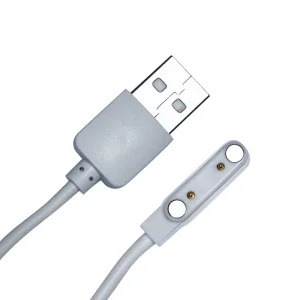
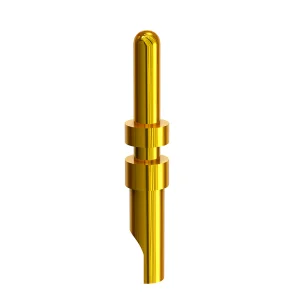
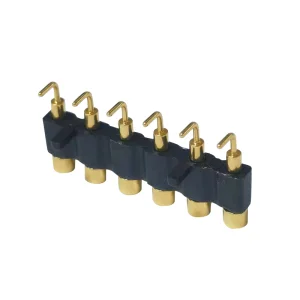
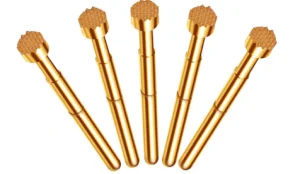
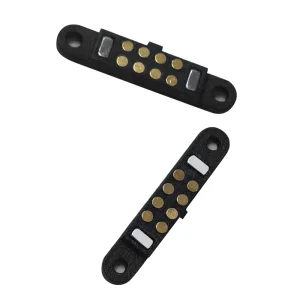
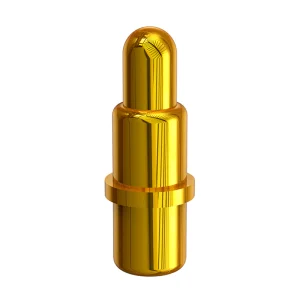
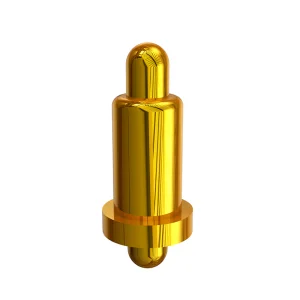
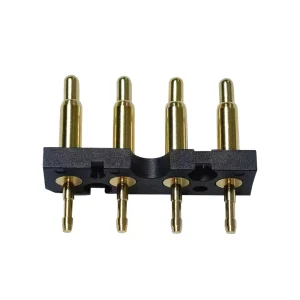
Explore our advanced range of SMT, custom-plated, and magnetic Pogo Pin interfaces designed for high reliability and optimal conductivity.
Founded in February 2011 in Songgang Street, Shenzhen, Shenzhen Rongqiangbin Electronic Hardware Co., Ltd. has established itself as an engineering-centric industry leader in the design, prototyping, and mass production of premium yet affordable Pogo Pin connectors.
Strategically positioned in the heart of the Guangdong-Hong Kong-Macao Greater Bay Area, our manufacturing infrastructure utilizes automated Swiss-type precision lathes to deliver high-performance micro-mechanical connection points. Our products serve as the vital link in modern wearables, communications devices, automotive telemetry, and consumer electronics globally.
We are relentlessly committed to serving as the preeminent domestic and international POGO PIN manufacturer. Our focus remains on delivering the optimal intersection of superior physical resilience and minimized per-unit production cost, propelling the next generation of miniature interconnect technologies.
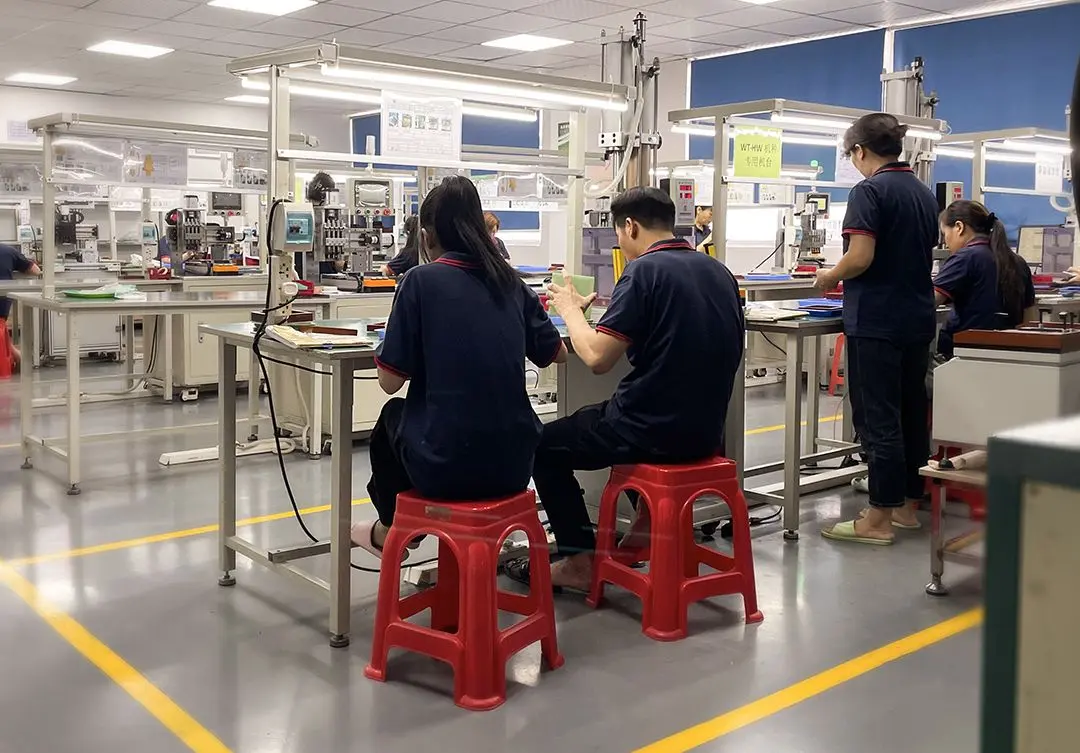
By blending extensive material expertise with state-of-the-art automation, we deliver unmatched technical value to our global OEM/ODM partners.
Over a decade of refining micro-machining tolerances. We boast a robust library of 300+ structural patents, enabling custom structural solutions for more than 4,000 global clients.
Certified strictly under ISO9001:2015 standards. Every batch undergoes 100% optical and mechanical testing, ensuring zero defective components cross our production thresholds.
Rapid physical prototyping and optimized multi-line automated output guarantee short lead times. Combined with responsive global logistics, we meet demanding supply chain windows.

Analyzing the evolution of spring loaded contact architectures, global sourcing cost-containment methodologies, and next-generation application trends.
Pogo pins, also known as spring-loaded contacts, have evolved from basic battery contacts to complex multi-signal high-frequency interfaces. The primary advantage of a pogo pin over traditional leaf-spring connectors lies in its axial movement profile. Standard leaf contacts slide across contact pads, inducing abrasive wear on the mating surfaces. In contrast, pogo pins feature vertical compliance, translating to a significantly longer operating lifecycle—often exceeding 1,000,000 compression cycles without degradation of contact resistance.
Modern electrical engineering trends demand high-current capacity in increasingly compact spaces. For instance, fast charging in wearable consumer electronics requires pins to conduct up to 5 Amperes or more while keeping thermal output negligible. Achieving high conductivity requires meticulous optimization of the plunger material (often Beryllium Copper or High-Lead Brass), barrel geometry, and internal spring kinetics. Proper internal configuration (such as bias-tail, ball, or hollow plunger designs) ensures constant contact between the plunger and the inner barrel wall, minimizing dynamic resistance fluctuations during movement.
For high-volume hardware manufacturers, unit economics are critical. However, procuring "cheap" Pogo plugs or spring-loaded pins can introduce hidden downstream costs if reliability is compromised. Inexpensive, poorly engineered connectors often suffer from three major design flaws:
At Shenzhen Rongqiangbin, we address the cost-vs-quality dilemma by utilizing advanced in-house automation. By executing all machining, plating verification, and mechanical assembly on high-speed, integrated production lines, we reduce waste, optimize material usage, and minimize labor costs. This allows us to offer competitively priced products without compromising mechanical or electrical performance.
To resist corrosion from sweat, environmental humidity, and chemical exposure, our high-durability products feature custom plating configurations. By utilizing a base layer of Nickel, followed by layers of Gold and unique Platinum-group metals (like Palladium), we ensure long-term biocompatibility and stable contact resistance even under challenging environments.
We provide tailored interconnect systems for diverse, demanding applications across various industries:
Operating a global supply chain requires strict adherence to international regulatory frameworks. Every connector manufactured by Shenzhen Rongqiangbin complies with RoHS (Restriction of Hazardous Substances) and REACH (Registration, Evaluation, Authorisation and Restriction of Chemicals) directives. We actively support our international clients by providing comprehensive material declarations, conflict mineral reports, and compliance certificates.
Furthermore, our engineering teams provide localized technical support. From the initial layout planning on your printed circuit board (PCB) to simulation modeling and final physical validation, we work alongside your design engineers to prevent common layout issues, such as poor SMT solder paste release or incorrect compression alignment.
Our commitment to rigorous quality control and technical expertise has earned the trust of leading global brands.
We maintain long-term partnerships and supply agreements with globally recognized enterprises including:
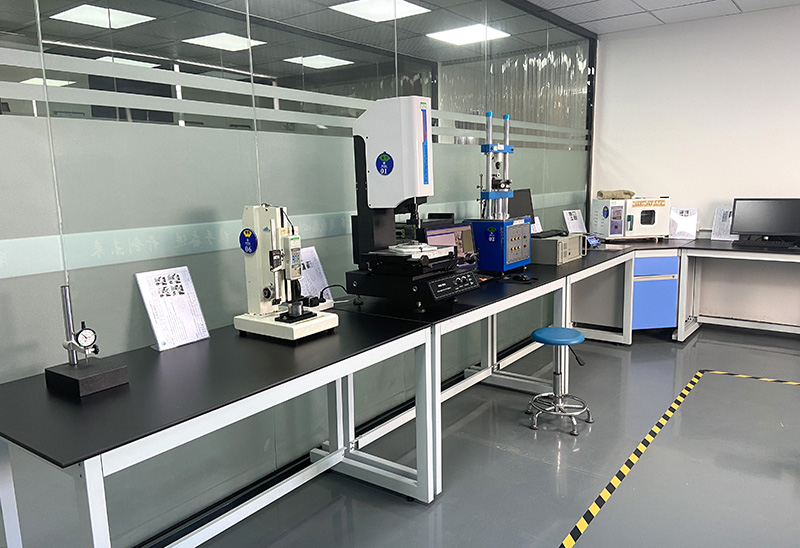
Every product batch is tested using state-of-the-art instrumentation to guarantee compliance with your target parameters:
Expert insights on selecting, designing, and optimizing spring-loaded pogo connections.
Pogo pin pricing is primarily driven by material choice (brass vs. beryllium copper), plating thickness (e.g., 3u" to 50u" gold over nickel), physical dimensions (micro-pins require high-precision machining), and production volume. By using high-speed automated lathe turning and vertical integration, we provide cost-effective solutions for both low-volume prototyping and high-volume mass production.
To maintain low and stable contact resistance, we utilize specialized internal geometries like the bias-cut plunger or an integrated ball design. This design forces the plunger to maintain constant contact with the interior barrel wall, minimizing resistance fluctuations during shock or vibration.
Yes. By optimizing the spring characteristics, pin shape, and physical spacing (pitch), we can design Pogo pin arrays that meet USB 3.1, USB4, and HDMI data speed requirements. Our engineering team conducts high-frequency simulations to optimize impedance matching and minimize signal insertion loss.
High-quality SMT/SMD Pogo pins must be constructed using high-temperature-resistant plastics, such as LCP or Nylon, to withstand typical lead-free reflow temperatures (reaching 260°C). We design our surface-mount pins with flat top surfaces or supply them with custom kapton caps to facilitate automatic vacuum pick-and-place assembly.
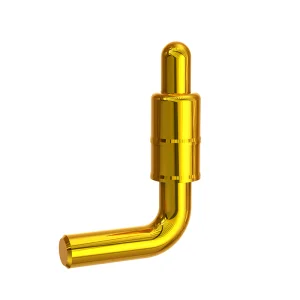
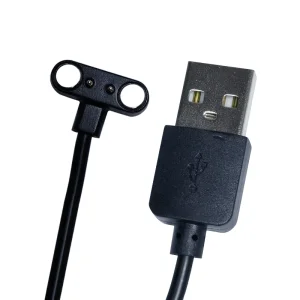
Explore our dynamic charging solutions, bending-type PCB mounts, and specialized magnetic USB connectors.
 Rongqiangbin Electronic