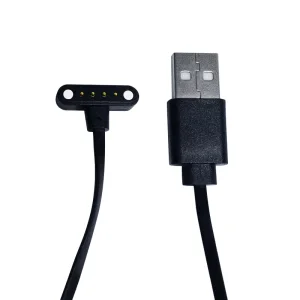
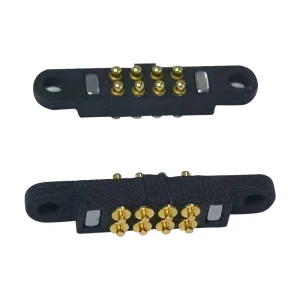
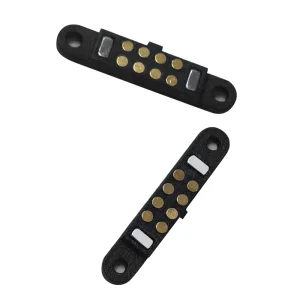
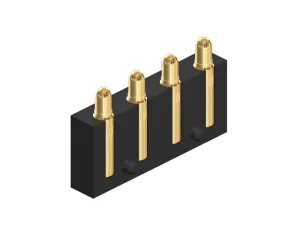
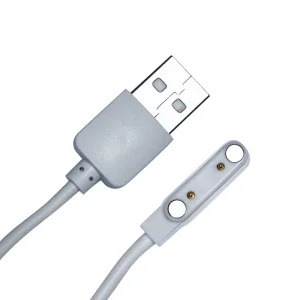
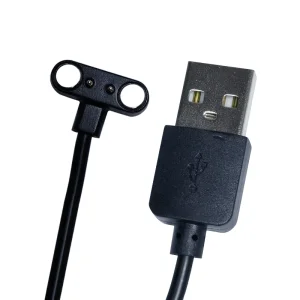
Exploring the market migration from mechanical physical connections to high-frequency, resilient magnetic spring loaded interfaces.
The global peripheral input market is experiencing a profound shift, driven by the expansion of hybrid workplaces, medical-grade terminal compute systems, industrial automation panels, and rugged military-grade tablets. Central to this interface evolution is the Keyboard Pogo Pin Connector. Historically, keyboards utilized physical locking cables, USB dongles, or Bluetooth protocols. Today, high-availability setups demand instantaneous, reliable physical-layer connections without the latency of wireless or the wear-and-tear of mechanical USB ports.
Our ODM solutions bypass traditional wear points by incorporating spring loaded contact pins paired with custom-magnetic configurations. For industries such as aerospace, logistics, marine, and medical healthcare, pogo pins ensure robust connectivity even under high vibration, environmental debris, or corrosive cleaning protocols.
By leveraging custom gold-plating, targeted contact geometries, and specialized retention magnets, Shenzhen Rongqiangbin offers turnkey manufacturing services that directly target the complex engineering needs of global hardware brands, smart device makers, and medical OEM clients.
Deciphering the micro-mechanics behind spring loaded contacts and electrical stability.
Maintained at ≤30mΩ during active movement or vibration. Low resistance guarantees signal integrity for high-speed protocols and efficient power supply without thermal buildup.
Optimized plating combinations utilizing Gold (Au) and Palladium-Nickel (Pd-Ni) overlays to withstand human oils, saline solutions, and industrial solvents, passing 48H to 96H salt spray tests.
Specially tempered internal springs (SUS304 or Music Wire) designed to execute over 100,000 compression cycles without structural deformation or spring fatigue, ensuring years of field service.
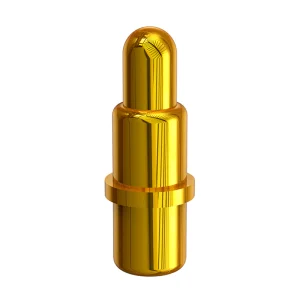
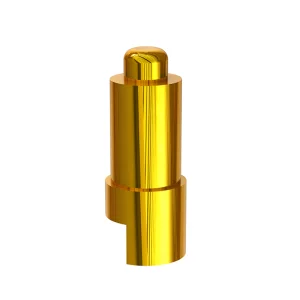
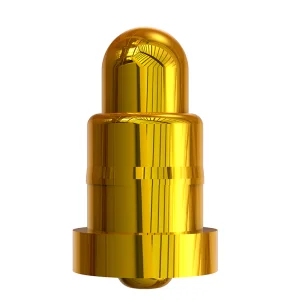
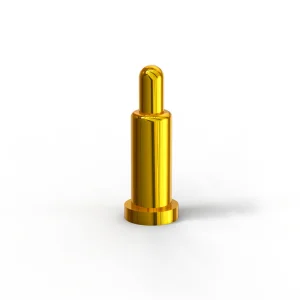
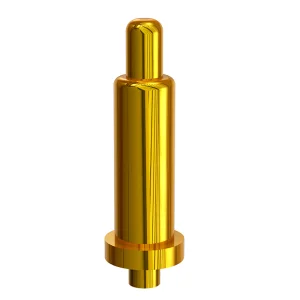
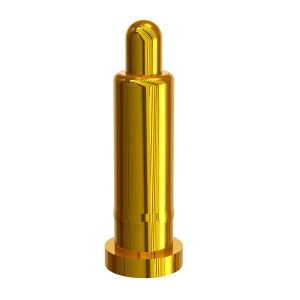
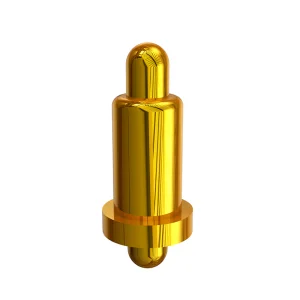
A keyboard pogo pin connector consists of three vital components: the Plunger, the Barrel, and the Internal Spring. For modern thin-profile keyboards (like 2-in-1 tablet keyboards), the connector pitch must shrink down to 1.5mm or even 1.0mm. To maintain mechanical stability, we utilize CNC turning processes to machine our brass (C3604) barrels down to precise tolerances (+/- 0.01mm).
The selection of raw materials is crucial. The plunger is typically made of Beryllium Copper (BeCu) or C3604 brass, and coated with nickel barrier layers followed by a thick gold outer layer (ranging from 3u" to 50u" based on OEM specifications). This configuration keeps the mechanical wear uniform and lowers friction coefficient during contact mating.

Founded in February 2011 in Songgang Street, Shenzhen, within the highly integrated Guangdong-Hong Kong-Macao Greater Bay Area, Shenzhen Rongqiangbin (RQB) has established itself as an engineering pioneer in the development, tooling, and high-volume fabrication of Pogo Pin Connectors.
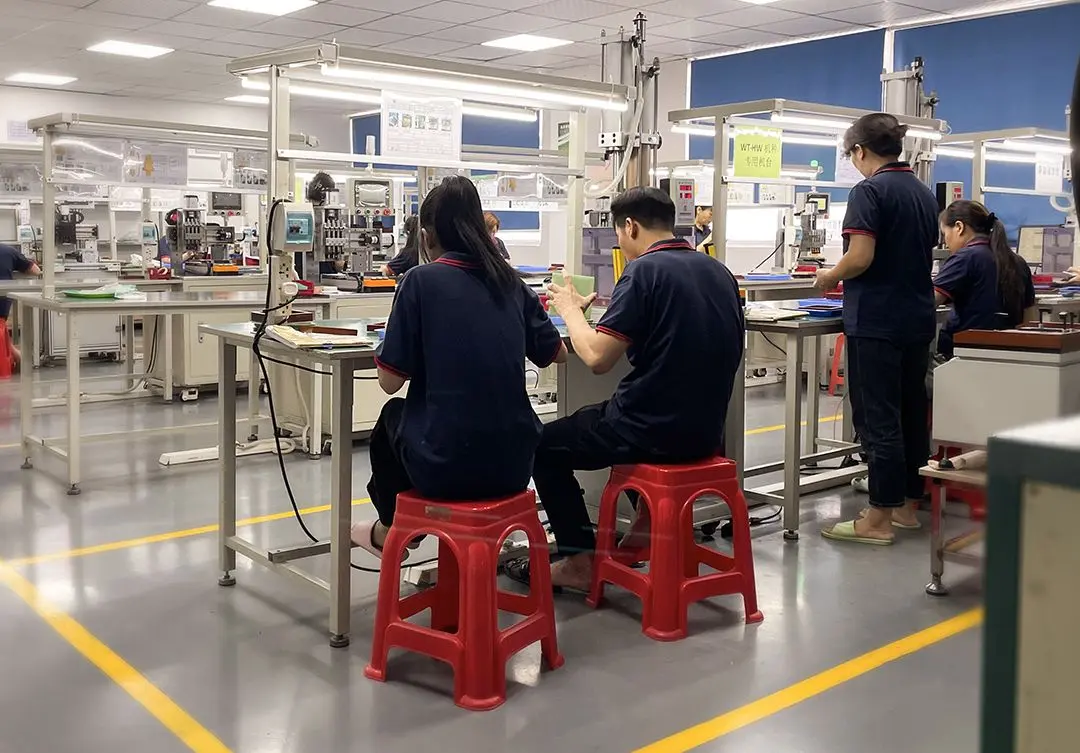
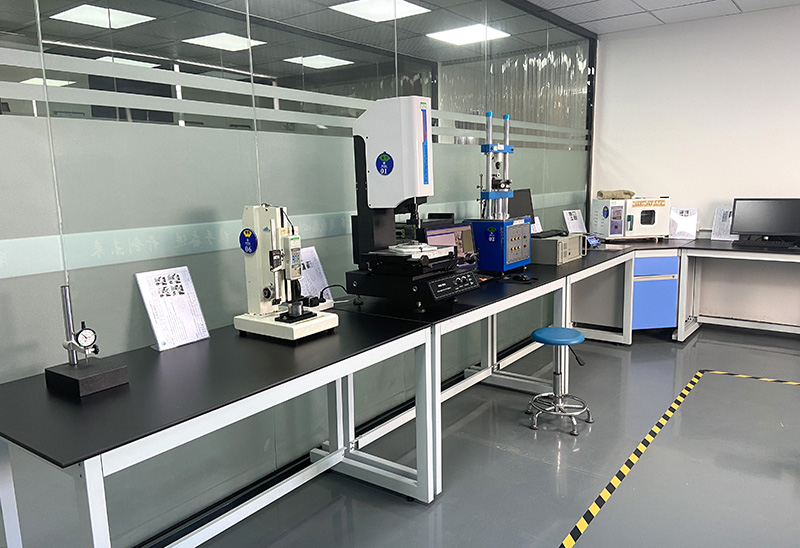
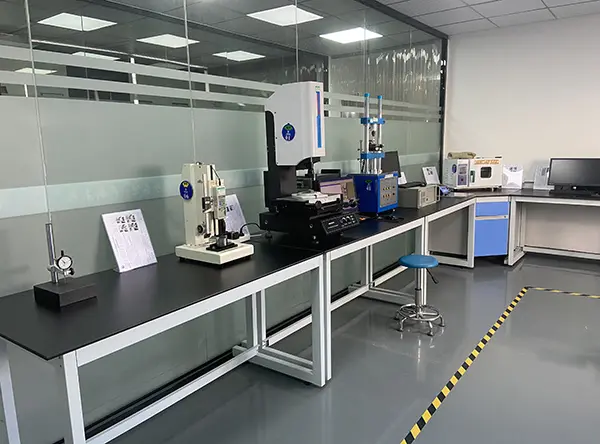
Over more than a decade of technical accumulation, RQB has expanded to a state-of-the-art facility featuring fully automated production workshops, precision testing laboratories, and a dedicated team of R&D engineers. Operating under the stringent quality management guidelines of ISO9001:2015, we deliver robust solutions designed to align with international regulatory and environmental compliance (RoHS, REACH, HF).
Our focus on cost-efficient manufacturing, paired with uncompromising quality inspection, has earned the trust of over 4,000 active clients and supported the registration of over 300 technical patents.
High-efficiency manufacturing paired with a world-class electronics client base.
We design and supply spring contacts to industry giants across telemetry, consumer electronics, industrial manufacturing, and automotive hardware:
From rugged fieldwork to ultra-thin consumer hardware, explore where our designs are deployed.
Modern mobile offices rely heavily on detaching smart keyboards. For tablets, weight, profile thickness, and reliable contact points are non-negotiable. Our custom 5-pin to 8-pin magnetic pogo-pin modules handle USB 2.0/3.0 data speeds, power distribution, and dynamic ground signals. Magnetic self-alignment configurations ensure physical docking happens instantly and effortlessly.
Medical keyboards must withstand rigorous sanitization and chemical washdowns. Exposed sockets (like standard Type-C or Micro-USB) harbor microbes and corrode rapidly when cleaning solutions pool inside. RQB's flat, gold-plated contacts on the keyboard side combined with sealed, waterproof spring pin headers on the dock facilitate seamless sanitization protocols and support an IP67/IP68 rating.
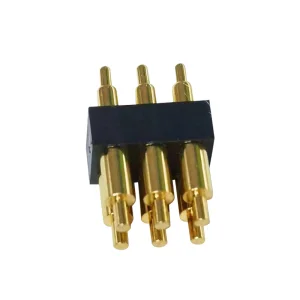
Factory floors, defense installations, and fleet logistics computers operate in high-vibration, shock-intensive environments. Traditional connectors can drop communication frames or crack under intense movement. RQB's side-mounted or vertical double-row pogo pins are designed with dynamic preload force parameters to maintain continuous pressure against the contact pad, preventing signal loss or data packet drops.
Furthermore, our waterproof pogo pin arrays use liquid silicone rubber (LSR) overmolding to prevent water ingress into the device body, securing reliability under harsh marine or tropical rain conditions.
Anticipating next-generation electronic requirements for ultra-high speed and micro-miniaturization.
Reducing connector pitch down to 0.8mm for high-density smart wearables and paper-thin tablet accessories, while maintaining a ≥50g contact force to counter accidental disconnection.
Optimizing internal plunger impedance matching to support high-speed transmission protocols (such as USB 3.2 Gen 2 and HDMI signals) directly over spring-loaded systems, minimizing insertion loss and jitter.
Transitioning from nickel-based barriers to non-allergenic, sweat-acid resistant advanced composite coatings. This ensures maximum safety for skin-contact wearable electronics and next-gen handheld input accessories.
Answers to complex mechanical and structural inquiries from system hardware architects.
For standard applications, we use nickel plating (1.25–2.5 μm) as a barrier base layer, followed by a gold plating layer (0.1–0.75 μm / 3u" to 30u"). For highly corrosive conditions, we can offer thicker gold overlays or specialized Palladium-Nickel (Pd-Ni) multi-barrier stacks to extend longevity.
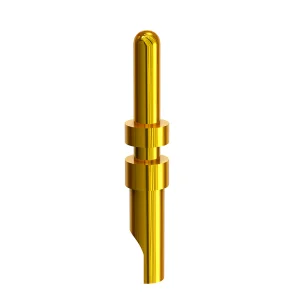
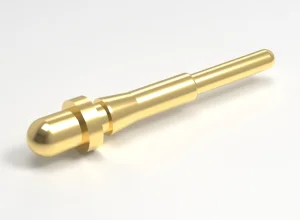
We optimize the spring preload force (typically between 60g to 120g) to counter external dynamic movement. Additionally, we utilize specialized plunger geometries (like bias-cut or ball-point structures) to maintain continuous contact against the inner barrel wall, minimizing contact resistance fluctuations.
Yes. Our engineering division design and develop custom molds for varying pitch dimensions. We support custom spacing patterns ranging from 1.0mm up to 4.0mm to fit proprietary PCB design footprints and enclosure requirements.
We execute 100% mechanical and electrical inspections. This includes force-stroke displacement mapping, dynamic resistance testing, CCD dimensional checks, salt-spray environmental chamber test, solderability screening, and manual electrical continuity sweeps.
We incorporate ground-first contact designs (where the ground pin is slightly longer than the data and power pins to connect first and disconnect last). We also treat our plungers with anti-oxidation, heat-tolerant materials to withstand instantaneous current surges up to 5A-10A.
Absolutely. We produce integrated modules containing both the pogo pin blocks and N52-grade neodymium magnets. We configure precise magnetic attracting/repelling alignments to assist users in locating the exact alignment when docking the keyboard.
For custom pogo pin configurations, prototyping tooling takes approximately 7–10 days. Once prototypes are approved, volume stamping and plastic injection molding tool setup takes 15–20 days, followed by rapid scale production execution.
Yes. We select high-temperature housing materials, such as LCP (Liquid Crystal Polymer) or High-Temperature Nylon (PA9T), that comfortably withstand standard lead-free reflow soldering profiles (peak temps of 260°C) without physical deformation.
 Rongqiangbin Electronic