Manufacturing Experience
Design Patents
Global Clients Served
Quality Inspected Products
In the contemporary consumer electronics ecosystem, hardware designers are perpetually striving to optimize the convergence of spatial efficiency, electrical conductivity, and structural longevity. The transition towards high-performance micro-connectivity has designated Pogo Pin spring-loaded contacts as the preeminent interface for portable computing, smartwatches, tracking devices, and specialized medical terminals.
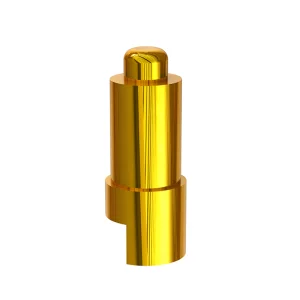
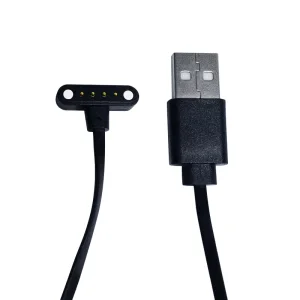
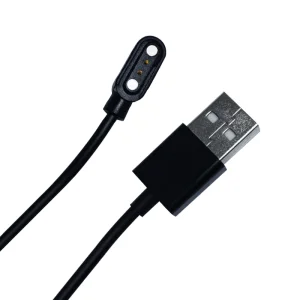
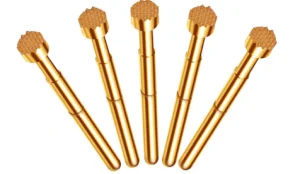
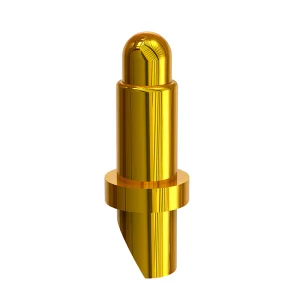
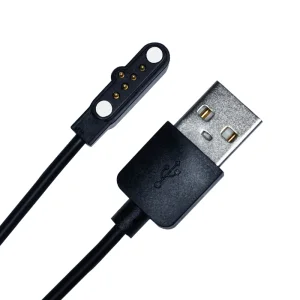
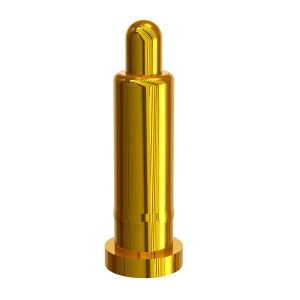
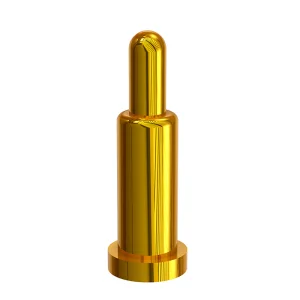
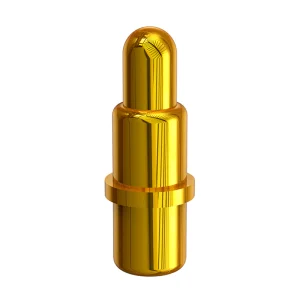
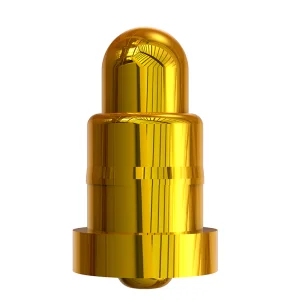
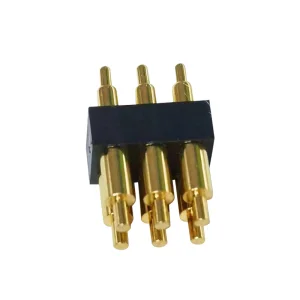
Specifically within the Samsung device ecosystem and related high-tier consumer brands, the adoption of ODM Pogo Pin chargers has expanded from simple smartwatch docking cradles to high-speed data transferring magnetic nodes. Pogo Pin structures utilize internal high-tension spring components housed inside micro-milled brass barrels. This assembly provides a robust, vibration-resistant, and high-cycle connector mechanism capable of supporting rapid charge profiles without compromising the product's aesthetic profile.
A standard charging cable or connector uses sliding friction terminals which suffer mechanical fatigue and surface wear over repeated cycles. Pogo pin technology operates through perpendicular mechanical compression. By minimizing sliding abrasion, the electrical contacts maintain stable impedance values over tens of thousands of insertion/docking cycles, yielding superior environmental sealing and user ergonomics.
Utilizing premium raw brass (C3604) and beryllium copper (BeCu) combined with high-grade plating (Gold over Nickel / Palladium-Nickel barriers) to yield minimal contact resistance and exceptional chemical corrosion resistance.
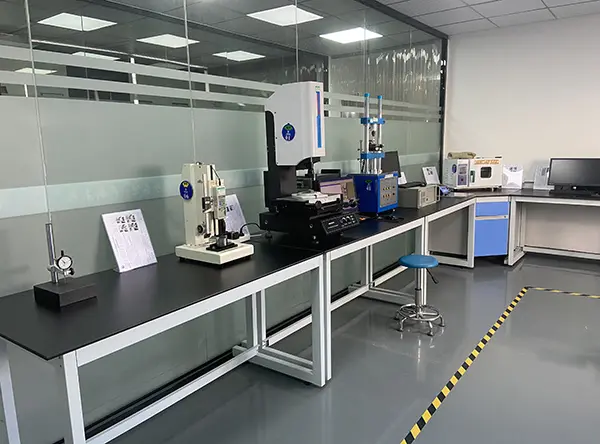
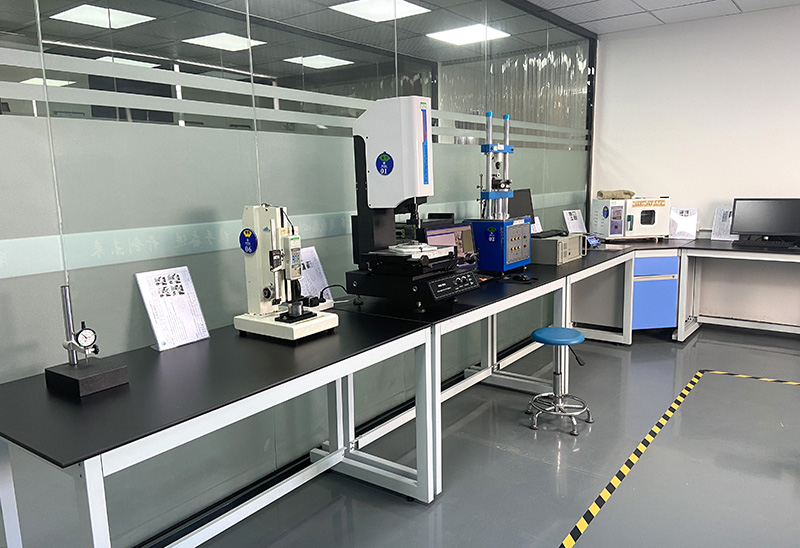
Operating under ISO9001:2015 standards, utilizing automatic optical inspection (AOI), spring force testers, micro-resistance meters, environmental chambers, and strict salt-spray testing setups.
Rapid mechanical design, 3D prototyping, magnetic attraction modeling, and SMT process analysis. Transition from conceptual specification validation to functional tooling samples within days.
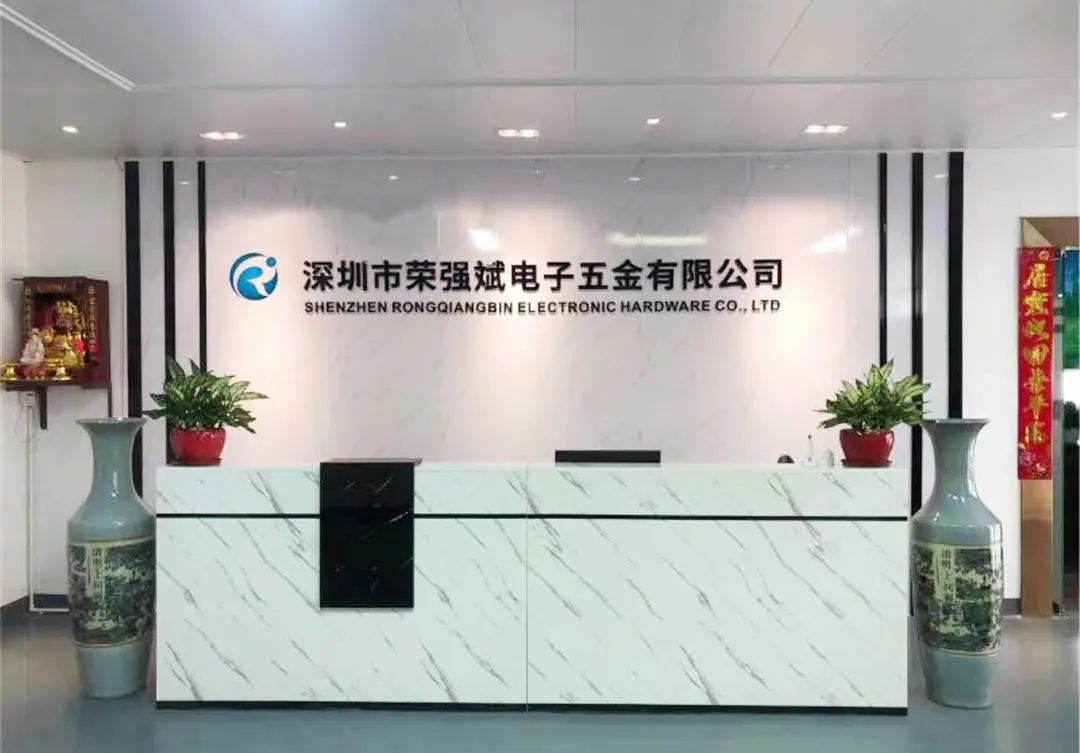
Located in the heart of the Guangdong-Hong Kong-Macao Greater Bay Area (GBA)—Shenzhen's Songgang Street—Shenzhen Rongqiangbin Electronic Hardware Co., Ltd. was established in February 2011. Over more than a decade of technological iteration, RQB has positioned itself as a global leader in high-reliability pogo pin development and manufacturing.
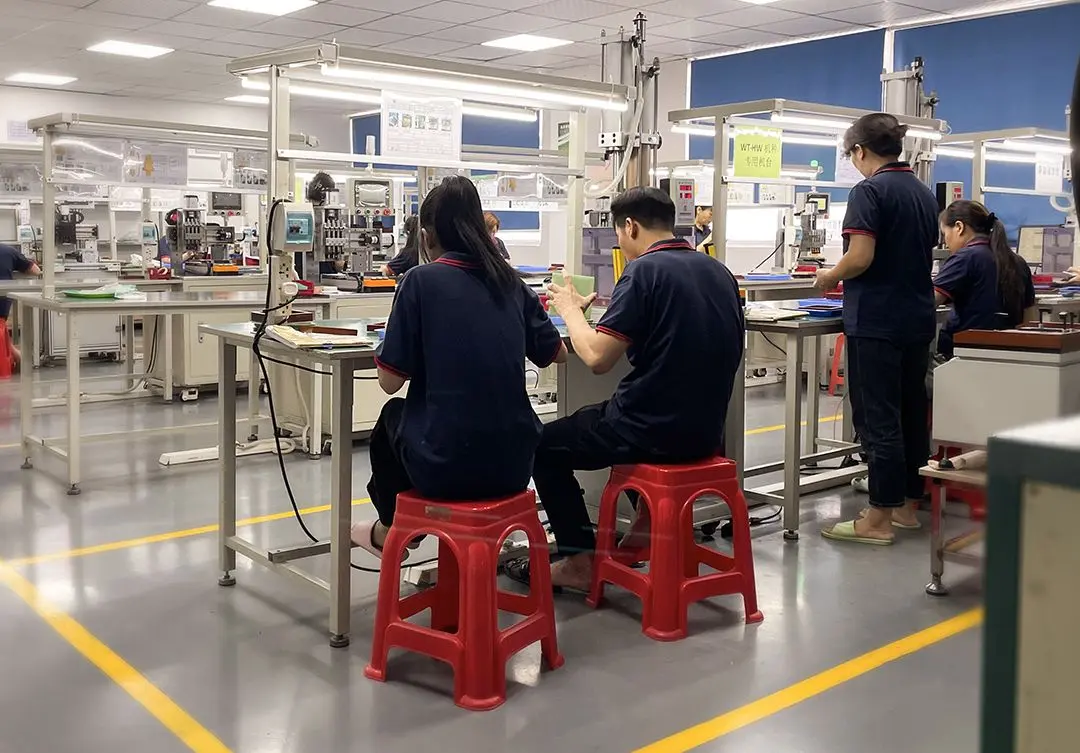
The strategic localization within Shenzhen provides unmatched supply chain responsiveness. Our facilities house advanced high-speed precision lathes, automated assembly lines, and high-throughput SMT packaging lines. This integrated ecosystem ensures that we can transition from low-volume customization to multi-million unit mass production with minimal lead times and exceptional unit-to-unit consistency.
Our corporate ethos—"customer first, integrity first"—is backed by a seasoned engineering division and a comprehensive environmental management protocol designed to comply with international regulations such as RoHS and REACH.

Wearable devices, such as the Galaxy Watch line and high-performance TWS earbuds, place unique demands on power and data connectors. Because these devices are worn directly against human skin, the metallic contacts are constantly subjected to sweat, lotions, seawater, and fluctuating thermal environments. A standard charging interface under such scenarios is highly susceptible to galvanic corrosion.
To counteract this failure mode, RQB’s engineering team has designed proprietary electroplating techniques. We offer custom plating formulations including thick gold (Au) coatings combined with specialized nickel (Ni) barrier layers or palladium-cobalt (Pd-Co) alloys. These advanced barrier layers significantly reduce chemical diffusion, preventing raw copper from oxidizing on the contact interface. Consequently, this maintains contact resistance below 30 mΩ even after thousands of sweat-soak cycles.
As international consumer electronics companies move toward highly integrated, slim profiles, we anticipate several distinct technology shifts in the pogo pin space:

For smartwatches and wearable charging docks exposed to human perspiration, we recommend a minimum gold (Au) thickness of 10 to 30 micro-inches over a specialized nickel-free or palladium-nickel (Pd-Ni) barrier layer. This ensures superior resistance to electrolysis, pitting, and galvanic corrosion over extended wear cycles.
We deploy in-line automatic sorting machines equipped with load-cell transducers. Every production batch undergoes continuous mechanical spring-rate validation. Pins with force deviations exceeding ±15% of the design nominal are automatically rejected, guaranteeing smooth and predictable mechanical engagement.
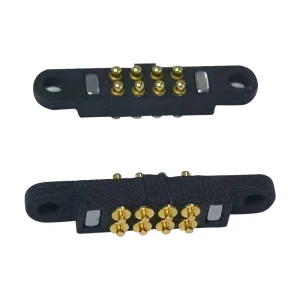
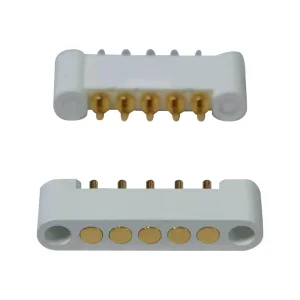
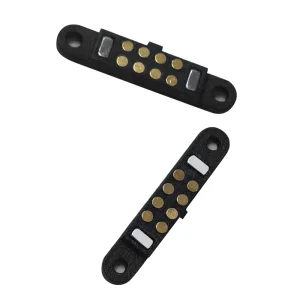
Yes. Our engineering division conducts detailed magnetic flux simulation and mechanical analysis. We design customized housing assemblies incorporating NdFeB magnets (grades N52 or custom high-temp variations) to deliver self-aligning, pull-force optimized docking interfaces that align the pogo pin array perfectly every time.
Upon digital CAD sign-off, functional sample prototypes are fabricated within 7 to 10 working days using our state-of-the-art precision CNC lathe setup. Scale mass production tooling typically requires 2 to 3 weeks, depending on the complexity of the plastic injection mold design and assembly automation.
Absolutely. We package our SMT/SMD pogo pins in carrier tape conforming to EIA-481 standards, complete with pick-and-place high-temp caps (polyimide/kapton or custom molded caps). This enables seamless integration into high-speed automated pick-and-place manufacturing systems.
We perform systematic environmental screenings, including temperature shock testing, humidity cycling, vibration durability, and Salt Spray tests (up to 48 or 96 hours depending on specs). All materials and finishes are verified by third-party laboratories to meet RoHS, REACH, and Halogen-Free compliance protocols.
 Rongqiangbin Electronic