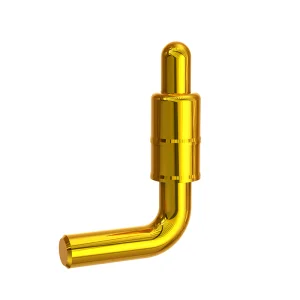
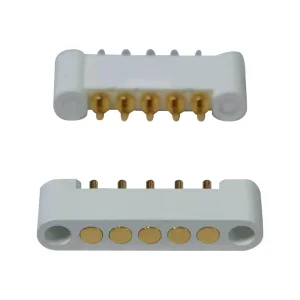
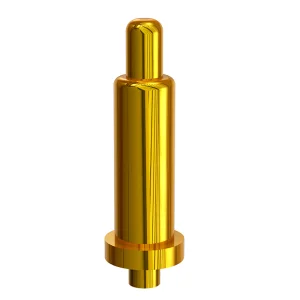
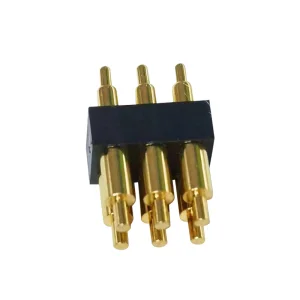
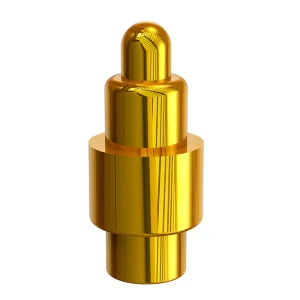
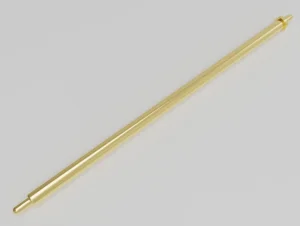
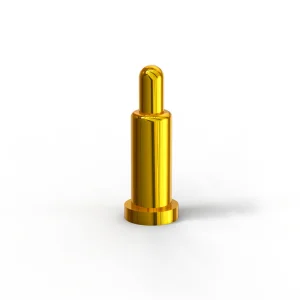
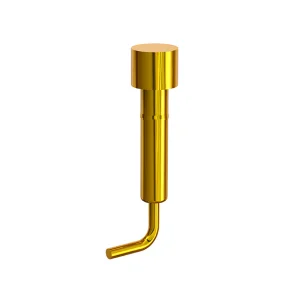
Engineered for low contact resistance, high vibration tolerance, and extreme thermal resilience across consumer electronics and heavy industries.
Founded in February 2011 in Songgang Street, Shenzhen, Shenzhen Rongqiangbin Electronic Hardware Co., Ltd. has established itself at the forefront of the precision connector industry. Located strategically in the leading city of the Guangdong-Hong Kong-Macao Greater Bay Area, our focus is the rigorous engineering, custom design, and volume manufacturing of high-performance Pogo pin connectors and heavy-duty current delivery structures.
By prioritizing precision engineering, raw material integrity, and innovative contact geometries, we serve as a vital manufacturing partner to global hardware OEMs. We address structural electrical bottlenecks, including Joule heating and contact resistance fluctuations in high-frequency, high-current environments.
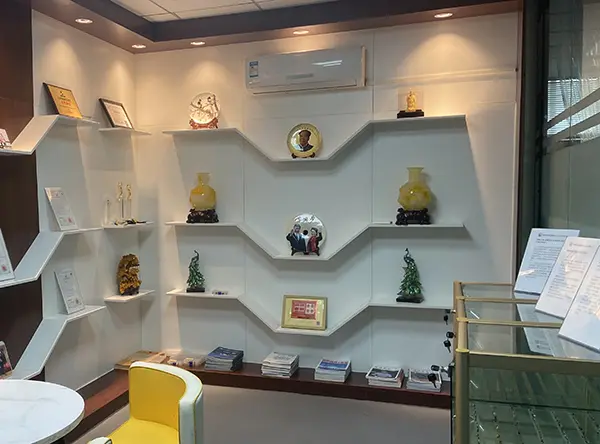
Delivering precision-manufactured high-current interconnections verified by industry certifications and rigorous testing protocols.
Managed under certified processes, ensuring traceable material logs, process controls, and consistent plating quality across production runs.
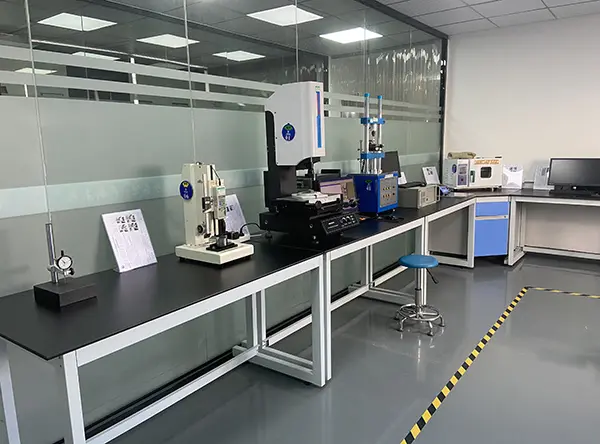
Automated visual screening and optical inspection verify structural dimensional tolerance and spring rate compliance prior to shipping.
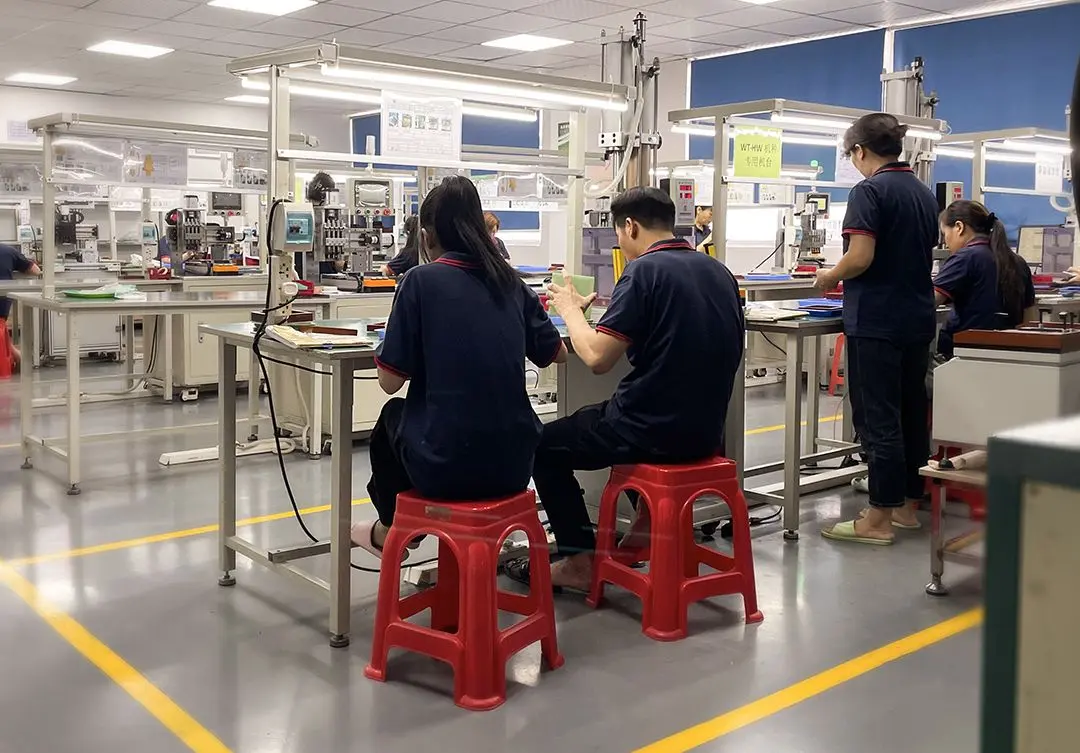
In-house CNC machining and automated assembly permit rapid iteration from concept drawings to functional, high-current validation samples.
In modern industrial and consumer hardware, connectors face demanding criteria: carrying higher current loads while reducing spatial footprints. Standard spring-loaded connectors can struggle under sustained currents above 2 Amperes, as the internal spring acts as an electrical coil, generating inductive resistance and localized Joule heating ($I^2R$). This thermal load can degrade internal components and weaken spring force over time.
To bypass these challenges, our high-current design integrates custom internal architectures. By utilizing advanced plunge-biasing and internal ball components, we create a direct, parallel pathway for electrical current. This bypasses the high-resistance spring, maintaining low contact resistance ($< 10 m\Omega$) and sustaining current levels of 10A, 20A, or up to 30A per pin in rugged configurations.
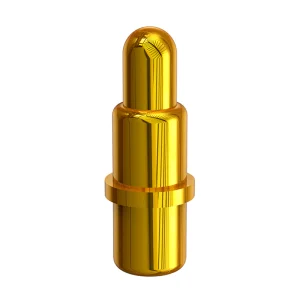
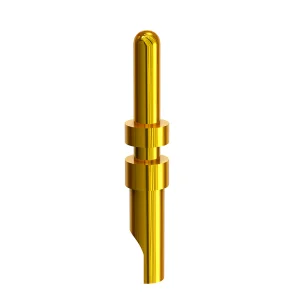
Standard plungers with flat back surfaces can lose connection with the internal housing wall during vibration, routing current through the spring. We resolve this with three specialized internal contact configurations:
| Design Architecture | Internal Mechanism | Typical Ampacity Rating | Primary Application Areas |
|---|---|---|---|
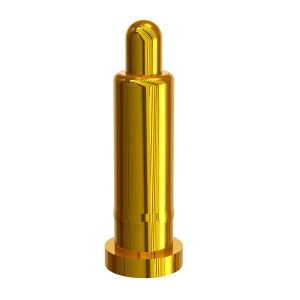
| Back-Drill Construction | Hollowed plunger end increases spring length, stabilizing spring force in compact assemblies. | 1A – 3A continuous | Low-power IoT sensors, smart home appliances, mobile accessories |
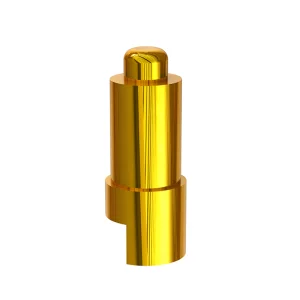
| Bias-Cut Plunger | An angled plunger tail ensures continuous contact with the barrel wall, reducing current routing through the spring. | 3A – 6A continuous | Smart wearables, handheld scanning systems, medical diagnostics |
| Ball-Contact Integration | An internal insulated ball maintains a low-resistance current pathway between the plunger and barrel, protecting the spring. | 6A – 30A+ continuous | Automated guided vehicle (AGV) docking stations, EV battery testing, high-speed charging cradles |
High-current performance depends heavily on material chemistry. Our standard plunger bases utilize high-conductivity lead-free brass or beryllium copper (BeCu) to handle peak electrical thermal cycles. The outer housings are plated with specialized layers to withstand environmental degradation:
Industrial electrification and miniaturization drive the demand for high-current connectors. As systems require more power in tighter layouts, traditional blade or pin-and-socket configurations are often replaced by dynamic high-current pogo pin systems. Key applications include:
Automated Guided Vehicles and Autonomous Mobile Robots (AMRs) in warehouses use quick-docking interfaces. Our high-current pins allow rapid charging cycles (up to 30A) during brief stops, maximizing system uptime.
Advanced diagnostic tools, handheld imaging devices, and wearable patient monitors require stable contact resistance. Gold-plated pogo pins provide dependable performance and resist sterilization chemicals.
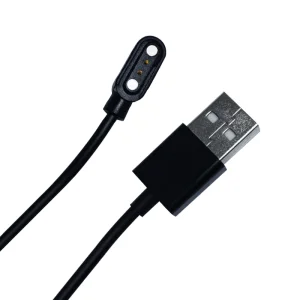
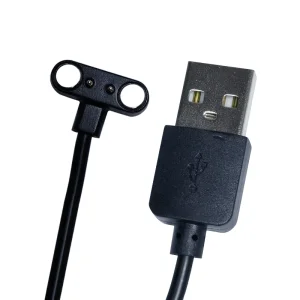
From smartwatches and VR headsets to wireless earbuds, our custom pogo pins support fast charging and data transfer in space-constrained, sweat-resistant designs.
Our engineering team works closely with designers to optimize housing geometries, spring forces, and mounting styles (SMT, DIP, or solder wire configurations). This collaborative process helps address complex tolerance stack-ups and physical layout constraints early in development.
"Committed to being an excellent POGO PIN manufacturer for both quality and cost domestically and abroad, and leading connector technology development."
We operate on the principles of "customer first, integrity first." Under ISO9001:2015 quality management standards, our environmental processes are designed to meet RoHS, REACH, and Halogen-Free requirements, supporting our partners' corporate social responsibility objectives.
We manufacture and supply custom connector systems for some of the world's most recognizable brands and manufacturing conglomerates.

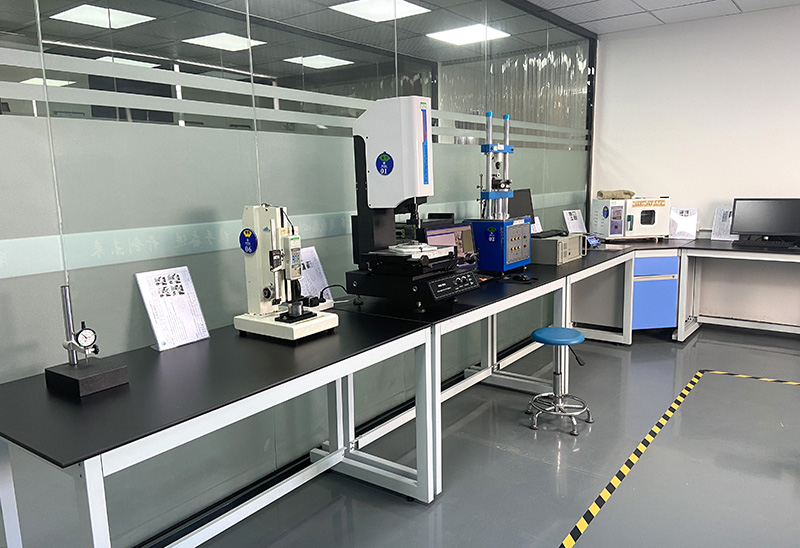
Our quality control infrastructure supports high reliability and predictable performance in the field. Our physical testing laboratories perform a variety of diagnostic sweeps, including:
Detailed answers to common engineering questions regarding high-current pogo pin design and implementation.
We use a combination of bias-cut plunger geometry and internal conductive elements. The angled tail of the plunger forces continuous lateral contact against the barrel wall, preventing electrical discontinuity when subject to mechanical vibration or shock.
Without an internal bypass, current must flow through the high-resistance steel spring. The spring acts as an inductor and a resistor, causing Joule heating ($I^2R$). Our high-current configurations bypass the spring entirely, routing current through the low-resistance barrel and plunger interface.
Our quality team uses X-ray Fluorescence (XRF) instruments to measure plating layers. This ensures the nickel barrier and final gold layer meet specified thicknesses, preventing premature wear and oxidation.
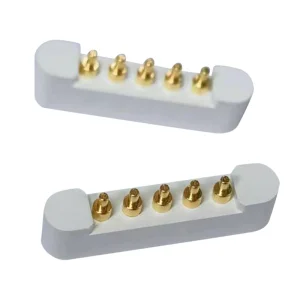
We support Surface Mount Technology (SMT) with pick-and-place caps, Through-Hole Technology (THT/DIP) for higher mechanical retention, and direct solder-tail wire configurations for wire-to-board applications.
Yes, we design waterproof connections up to IPX7 and IPX8 standards. This is achieved by combining precision-turned metal parts with elastomeric O-rings or specialized overmolding techniques to block water ingress.
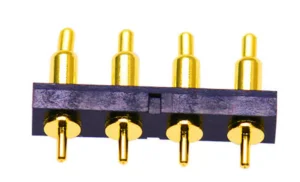
Select from our manufacturing configurations, customizable to fit your project's pitch, mechanical force, and current requirements.
 Rongqiangbin Electronic