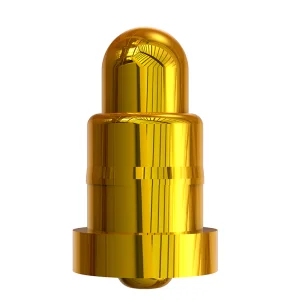
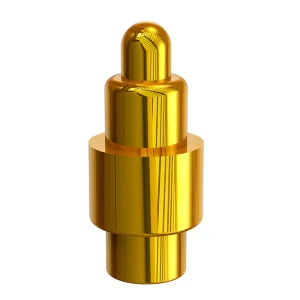
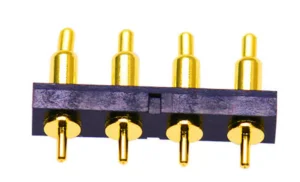
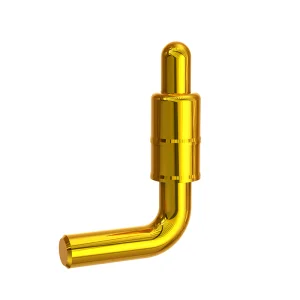
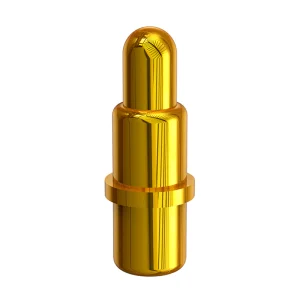
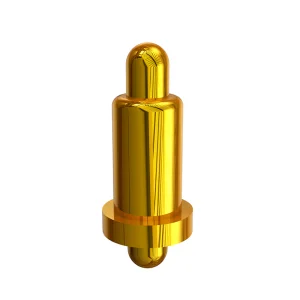
Custom Magnetic Pogo Pin Supplier & Factories

Precision Engineering, Superior Retention Forces, and Scalable OEM/ODM Solutions for Global High-Reliability Electronics

Executive Whitepaper: The Strategic Importance of Custom Magnetic Connectors

An in-depth analysis of spring-loaded contact science, material dynamics, and alignment systems driving next-generation hardware designs.

1. Technical Overview of Spring-Loaded Systems

In modern electronic design, the physical connection interface represents a major bottleneck for reliability, ingress protection, and user experience. Traditional friction-based connectors (such as USB Micro-B or Type-C) require precise alignment, insert-force exertion, and are highly prone to mechanical degradation after a few thousand insertion cycles.

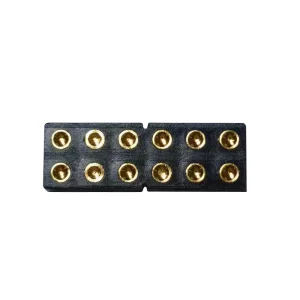
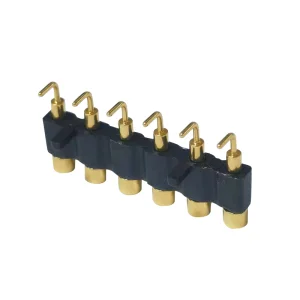
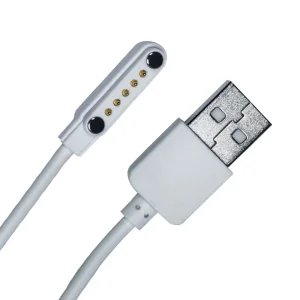
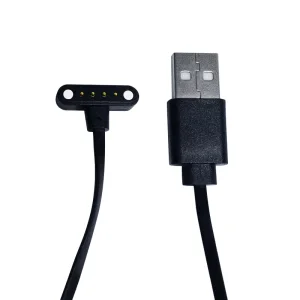
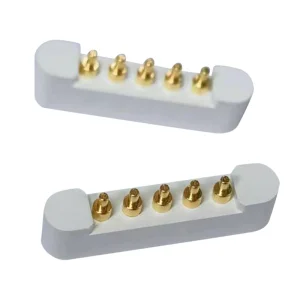
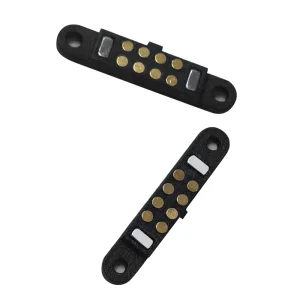
Custom magnetic pogo pin connectors resolve these critical vulnerabilities by combining precision-machined spring loaded pins (pogo pins) with high-strength NdFeB (Neodymium) permanent magnets. The core technology leverages magnetic fields to self-align the male plug with the female socket, establishing a reliable electrical path instantly without visual guidance or physical exertion. The compression force of the spring internal to the pogo pin provides constant, uniform contact pressure, maintaining low contact resistance (<30mΩ) under extreme vibration and cyclic stresses.

"By decoupling physical retention from insertion friction, magnetic pogo pin mechanisms extend the service life of device connection interfaces to over 100,000 mating cycles while facilitating IP68-rated waterproof integration."

2. Anatomy and Component Chemistry

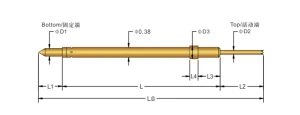
The reliability of a custom pogo pin is dictated by its component material composition and finishing quality. Our engineering and manufacturing pipelines utilize strict metallurgy controls:

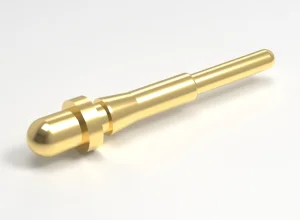
  • Plunger: Fabricated from high-leaded brass or beryllium copper alloys, plated with thick gold (typically 3u" to 50u") over nickel. Gold provides excellent electrical conductivity and premium oxidation resistance, which mitigates electrolytic erosion under continuous bias current.
  • Barrel: Deep-drawn or precision-turned brass tubing. The interior chamber is highly polished to minimize mechanical friction between the plunger and the inner wall, eliminating the risk of internal jamming or micro-arcs.
  • Spring: Made of high-tensile stainless steel wire (SUS304) or music wire. The spring profile is customized (conical, helical, or force-compensated) to control the compression curve, guaranteeing stable mating force (e.g., 60g to 150g at working stroke) across the tolerance spectrum.
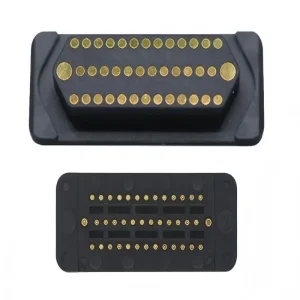
  • Magnetic Assembly: Neodymium magnets (N52 grade) enclosed in custom polymer housings. Sintered NdFeB is nickel-plated or epoxy-coated to prevent degradation in humid, salty, or sweat-laden environments.
Performance Parameter Standard Specification Premium Customization Range Engineering Benefit
Contact Resistance < 50 mΩ < 15 mΩ (Ultra-low contact resistance) Reduces heat generation at high current loads
Rated Current 1.0A - 2.0A per pin 5.0A - 40A (High current charging) Enables fast-charging capabilities in small form factors
Working Stroke 0.5mm - 1.5mm Up to 3.0mm (Custom compression range) Compensates for mechanical assembly tolerances
Mating Durability 10,000 cycles 100,000 - 1,000,000 cycles Outlasts the device service life
IP Waterproof Rating IP54 / IP65 IP67 / IP68 / IP69K (Hermetic sealing) Protects internal electronics from water, dust, and sweat

3. Global Procurement Trends & Strategic Sourcing Needs

International hardware designers and supply chain executives face unprecedented pressure to bring robust, differentiated hardware architectures to market quickly. Global procurement patterns show a distinct shift toward consolidated partnerships with direct, vertically integrated magnetic pogo pin manufacturers like Shenzhen Rongqiangbin Electronic Hardware Co., Ltd.

The driving factors for selecting a direct manufacturing partner rather than trading intermediaries include:

Direct Design Verification

Direct communication with experienced factory FAEs (Field Application Engineers) during early EVT and DVT design phases to verify PCB trace routes, stackup configurations, and spatial restrictions.

Custom Tooling Agility

Rapid custom prototyping of polymer housings and magnetic alignments in 7 to 10 days, followed by structural injection mold design under one roof.

Uncompromising QA Data

Traceable batch certifications including RoHS, REACH, halogen-free directives, and real-time Cpk data analysis on critical connector tolerances.

4. Macro Industry Solutions & Multi-Domain Applications

Our customized magnetic pin connections serve as critical enablers across high-growth electronic vertical markets:

  • New Energy & Electric Vehicles (NEV): Electric scooter docking, internal dashboard controls, and high-vibration power delivery points where physical locks are prone to failure under structural shock loads.
  • Medical Diagnostics & Assistive Devices: Hermetically sealed, magnetic interfaces on hearing aids, hand-held diagnostic monitors, and wearable biosensors. Low-friction break-away connections protect delicate equipment from accidental trip falls.
  • Industrial Robotics & AGVs: Zero-insertion force charging docks for autonomous guided vehicles and modular end-of-arm tooling where alignment tolerances must be wide, and electrical engagement must be automatic.
  • Premium Consumer IoT & Wearables: Sports smartwatches, TWS earbuds, and VR headsets that require ultra-slim profiles, corrosion protection against sweat (synthetic sweat testing), and magnetic polarization to prevent reverse-voltage errors.

About Shenzhen Rongqiangbin Electronic Hardware Co., Ltd.

A decade of design innovation, manufacturing depth, and unmatched patent ownership in precision pogo pin connectors.

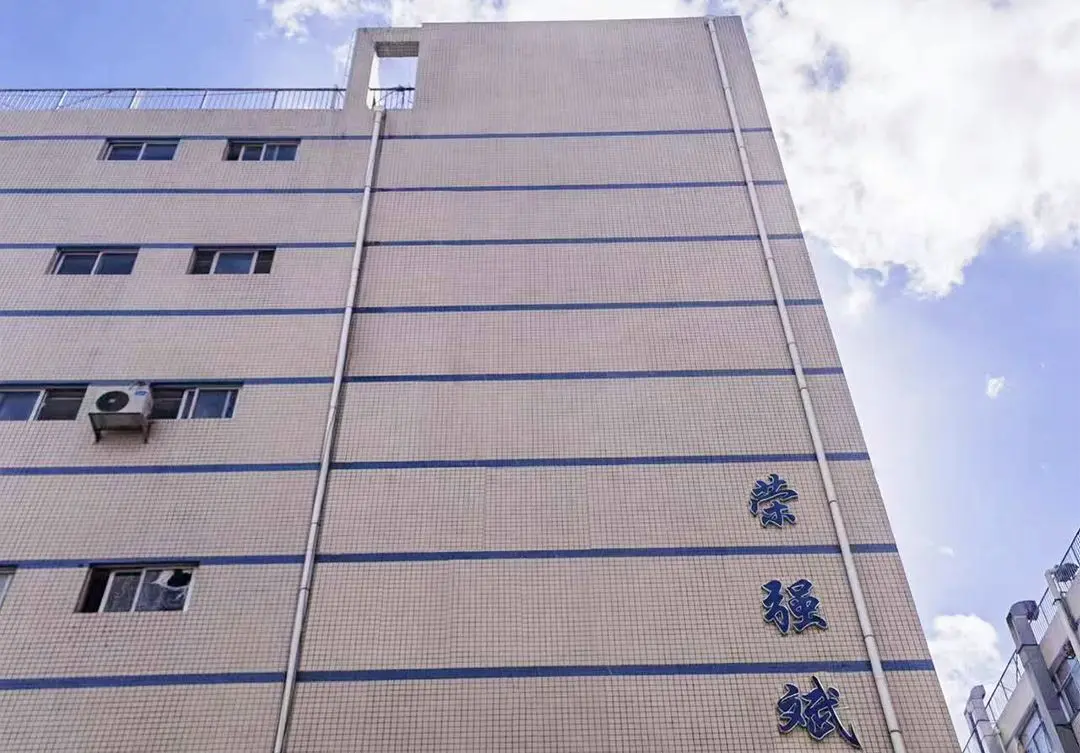
Established in February 2011, Shenzhen Rongqiangbin Electronic Hardware Co., Ltd. is strategically based in Songgang, Shenzhen, within the heart of the Guangdong-Hong Kong-Macao Greater Bay Area. The region offers unmatched engineering supply chains, rapid materials procurement, and access to international logistics nodes.

For over a decade, we have focused exclusively on the mechanical design, engineering validation, and high-capacity manufacturing of POGO PIN connectors and their derivative magnetic connector assemblies. Through continuous R&D investment, the company has grown from a specialized workshop into a highly respected global leader in the interconnect field.

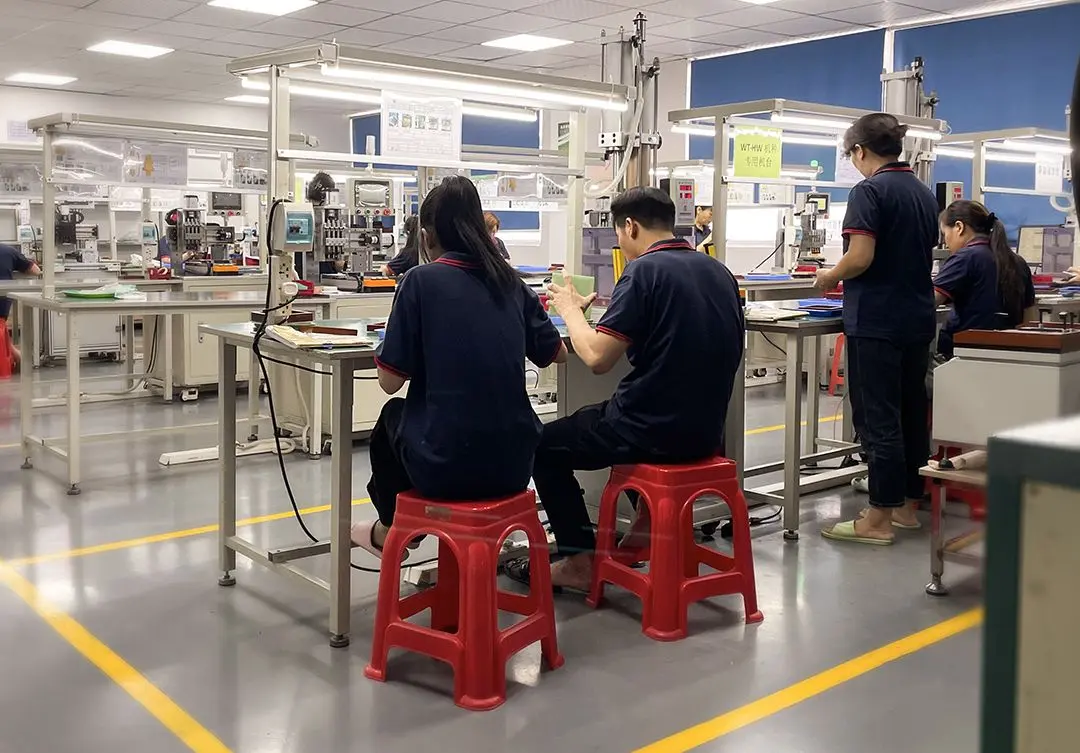
Our operational philosophy centers on "Customer First, Quality Integrity." We support this mission with an advanced engineering team, high-precision automated lathe facilities, high-speed automated assembly lines, and a robust ISO9001:2015 quality management system.
10+
Years of Manufacturing
300+
Patents Granted
4,000+
Global Corporate Clients
100%
Pre-shipment Inspection

Why Choose Rongqiangbin?

Uncompromising inspection protocols, certified factory systems, and trusted supply status with global OEMs.
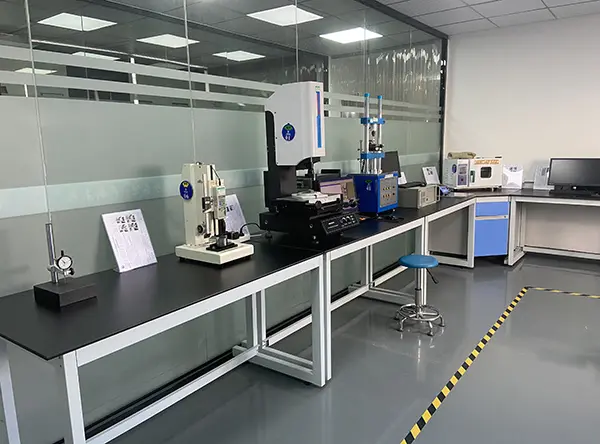
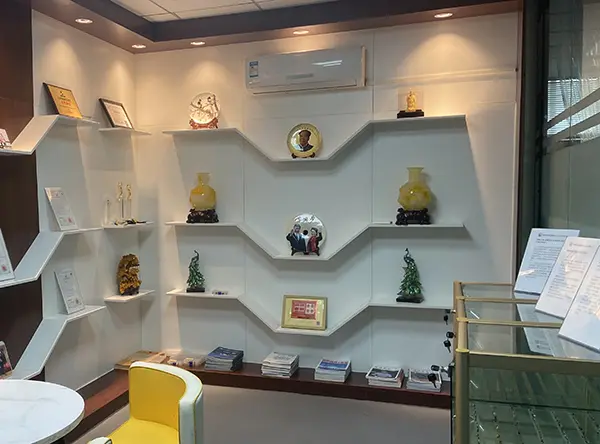
Shenzhen Rongqiangbin maintains competitive advantages across multiple dimensions, establishing long-term partnerships with leading global brands:

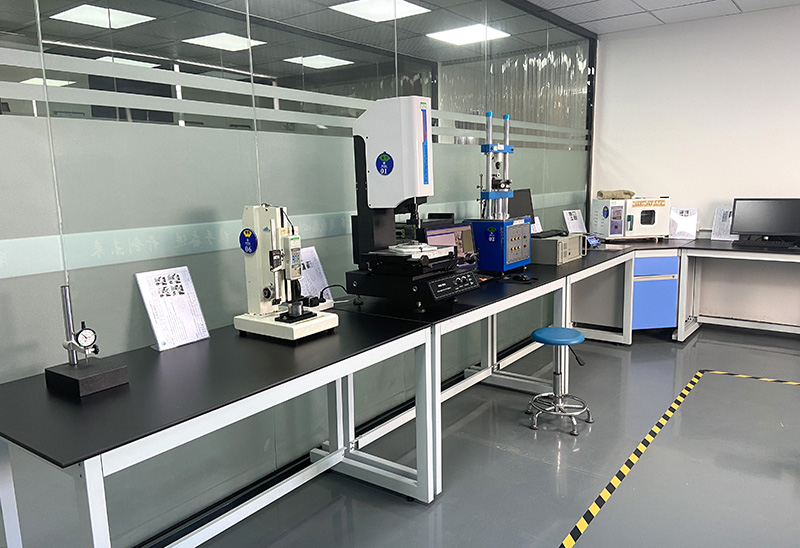
  • Advanced Testing Equipment: Our in-house quality assurance center features automated optical inspectors (AOI), dynamic contact resistance testers, force-deflection curve measurement rigs, X-ray plating thickness analyzers, and salt spray chambers.
  • 100% Quality Auditing: Every production lot undergoes complete inspection at the assembly phase and a strict pre-shipping QA cycle to guarantee zero-defect shipments.
  • Prestigious Global Partnerships: We are a trusted supplier to tier-1 enterprise organizations, including Honeywell, Samsung, SIEMENS AG, ZTE, 360, QCY, HAYLOU, Shanghai Laimu, Luxshare Group, Aoni Electronics, and Amphenol Group.
  • Environmental & Ethical Integrity: Our manufacturing plant operates under the strict guidelines of environmental conservation, ensuring all raw material sources comply with international green manufacturing directives.
Rongqiangbin Brand Identity

Technology Roadmap & Future Outlook (2024-2030)

Our commitment to guiding the engineering development of magnetic connectors through cutting-edge design paradigms.

2024 - 2025
High-Frequency Data Integration (10Gbps+ USB 3.2 Gen 2)
Developing advanced impedance-matched coaxial magnetic pogo pins capable of delivering high-speed differential signals alongside power, supporting multi-gigabit data transfers without signal reflection or loss.
2026 - 2027
Advanced Sweat-Resistant Alloys & Bio-Compatibilities
Pioneering innovative plating formulations (including Rhodium-Ruthenium and Platinum coatings) specifically engineered to withstand synthetic sweat exposure and skin oil acidity. This prevents oxidation and contact degradation in advanced medical wearables and high-intensity sports tracking devices.
2028 - 2030
Sub-Millimeter Pitch Ultra-Miniaturization & Dynamic Overmolding
Advancing structural research into pitch dimensions under 1.0mm, paired with liquid silicone rubber (LSR) overmolding. This enables hermetic sealing, dynamic flex-retention, and an IP69K waterproof rating suitable for extreme marine and aerospace deployment.

Comprehensive Design Engineering FAQ

Expert insights into common technical questions regarding magnetic pogo pin custom integration, material selection, and electrical performance parameters.

Q1: What are the primary design rules to prevent electrochemical/electrolytic corrosion in magnetic pogo pins?
Electrochemical corrosion occurs when a voltage bias exists between the pin and receptor in the presence of conductive fluids (like sweat or sea mist). To mitigate this risk, we optimize plating thickness by applying 20u" to 50u" of hard Gold (Au) over a non-porous Nickel (Ni) barrier. Additionally, we integrate intelligent circuit architectures, such as load detection switches, ensuring power is only applied to the pogo pins after full magnetic engagement.
Q2: How does Rongqiangbin guarantee correct N/S magnetic polarization (mistake-proofing)?
Our design process uses magnetic and mechanical mistake-proofing (keying). We configure the polarity of Neodymium magnets so the male and female housings only mate when aligned correctly. Attempting to connect them in reverse triggers magnetic repulsion, physically preventing incorrect insertion and protecting the PCB from reverse-polarity damage.
Q3: Can magnetic pogo pin connectors support high-speed USB data signals?
Yes, they can. By controlling pin impedance (typically matched to 90Ω for USB 2.0/3.0 differential signals) and designing specific ground-return shields using surrounding pins, we successfully engineer magnetic assemblies that support high-speed data transmission up to 10 Gbps (USB 3.2 Gen 2) with minimal attenuation.
Q4: What is the maximum continuous current capacity of a custom magnetic pogo pin connector?
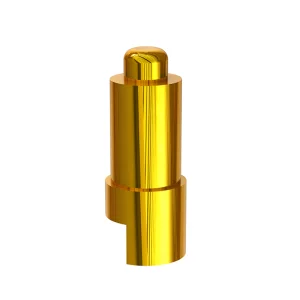
While standard catalog pins typically handle 1A to 2A, our custom high-current designs feature modified plunger shapes (such as bias-cut or ball-point internals) to increase contact surface area inside the barrel. This reduces contact resistance and enables our connectors to support up to 40A of continuous current in applications like electric vehicles and industrial charging docks.
Q5: How does your factory achieve IP67/IP68 waterproof ratings for these connectors?
Waterproofing is achieved at the interface level using two primary methods: overmolding (insert molding) the plastic carrier directly around the pogo pin barrels, or using O-ring seals combined with potting epoxy inside the housing. This prevents water from penetrating the internal PCB chamber, even under continuous immersion up to 1.5 meters for 30 minutes.
Q6: How do you establish customized spring force tolerances for high-vibration applications?
We use advanced spring simulation software during the mechanical engineering phase. Once prototypes are built, our automated force-deflection curve instruments measure the exact spring force at various compression points. This ensures the spring load remains stable, even during industrial vibration cycles.
Q7: What is the lead time for custom tooling and product manufacturing?
For custom components, we complete structural 3D design and FAE analysis in 2 to 3 days. Rapid physical prototyping of plastic housings and magnets takes 7 to 10 days, while hard tooling and high-precision production injection molds are typically completed in 21 to 25 days. Mass production lead times vary based on quantity, averaging 2 to 3 weeks.
Q8: What compliance standards do your manufacturing facilities and materials meet?
All our production and research processes are certified under the ISO9001:2015 Quality Management System. Additionally, all raw materials, including brass alloys, beryllium copper, spring steel, plating chemicals, and NdFeB magnets, comply with global environmental directives (RoHS, REACH, and Halogen-Free).