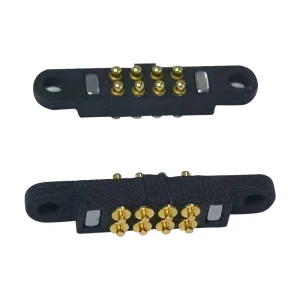
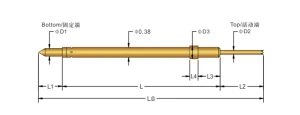
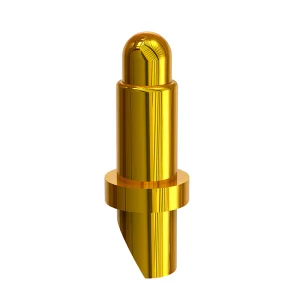
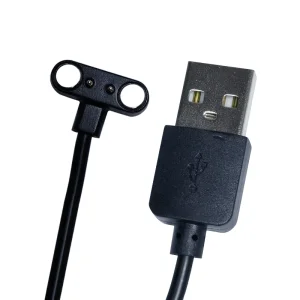
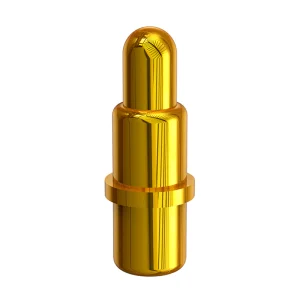
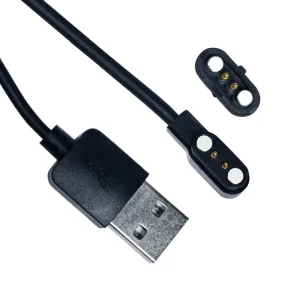
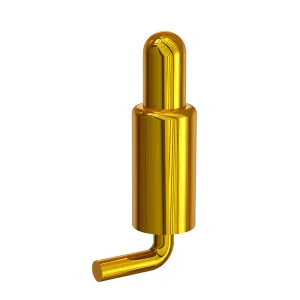
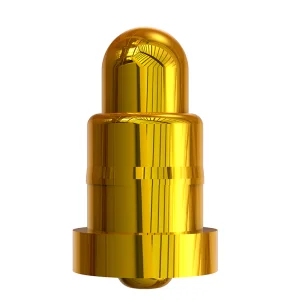
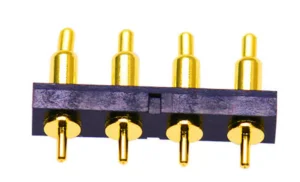
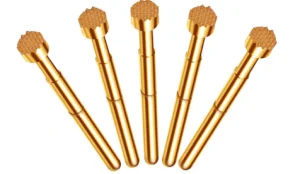
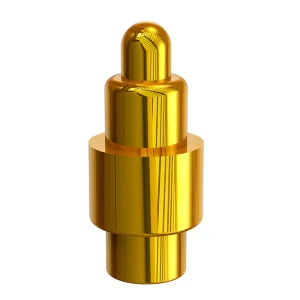
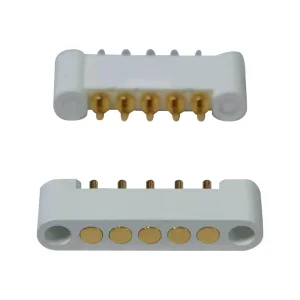
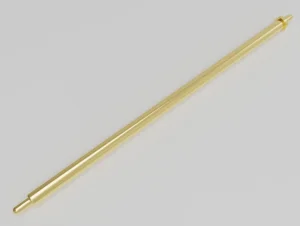
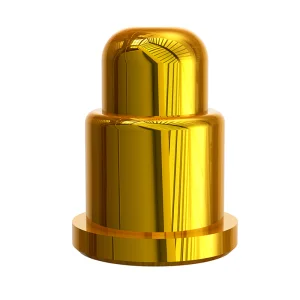
Explore our premium range of engineering-grade spring-loaded and magnetic connection solutions designed for global industries.
Years of Engineering Experience
Global Industrial Partners
R&D Technical Patents
In-Process Quality Inspection
In the modern electrical and electronics manufacturing ecosystem, the contact interface serves as the primary gateway for signal and power integrity. From consumer hardware to precision medical and industrial systems, standard interconnects are yielding to custom, space-saving designs. The growing demand for smaller footprints, higher mating cycles, and zero-defect performance has driven the rise of spring-loaded contact technologies (Pogo Pins) and self-aligning magnetic connectors.
Traditional board-to-board connectors are constrained by rigid tolerances, susceptibility to dust or fluid ingress, and high wear rates over repeated mating cycles. Pogo pin technology overcomes these limitations by utilizing an internal spring to maintain continuous contact pressure. This compensates for dynamic vibration and assembly tolerances, ensuring reliable electrical performance even in demanding mechanical environments.
As a leading designer and manufacturer of precision connection solutions, Shenzhen Rongqiangbin Electronic Hardware Co., Ltd. (RQB) engineers components to address these mechanical challenges. By optimizing plunger geometry, choosing premium base materials, and utilizing specialized plating chemistry, we deliver interconnect systems that perform under harsh conditions.
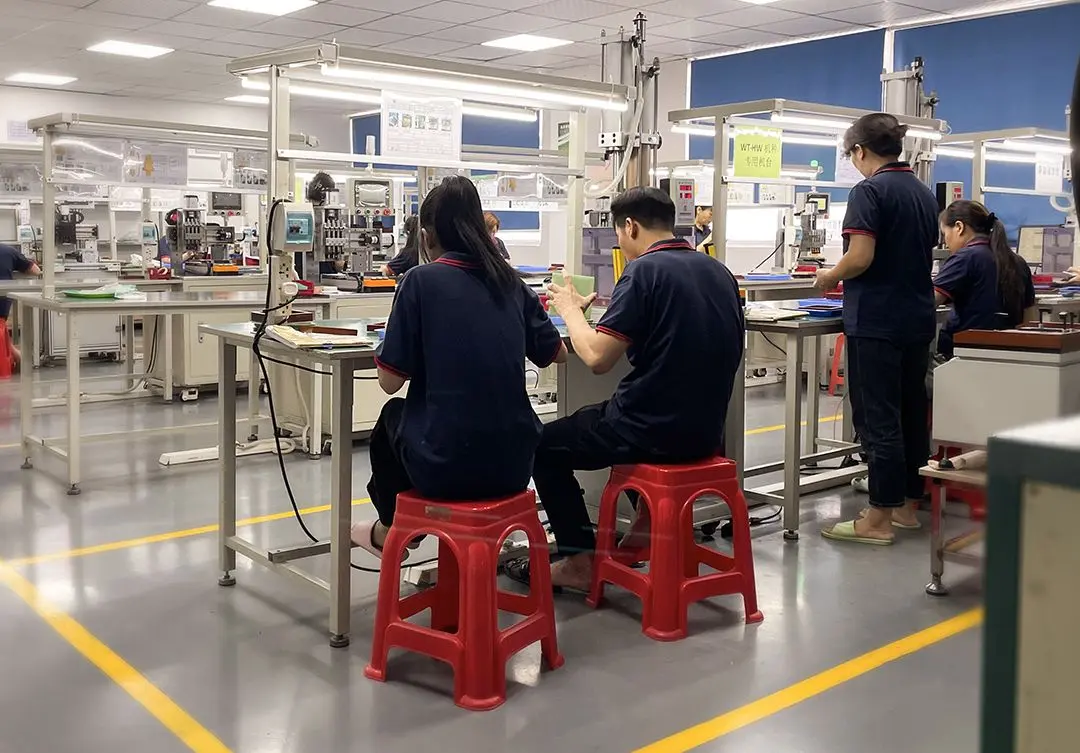
Shenzhen Rongqiangbin Electronic Hardware Co., Ltd. combines technical expertise, rigorous quality control, and custom engineering support to deliver reliable interconnect solutions.
We provide comprehensive design support, transforming client concepts into functional designs, custom pin configurations, and integrated connector housings.
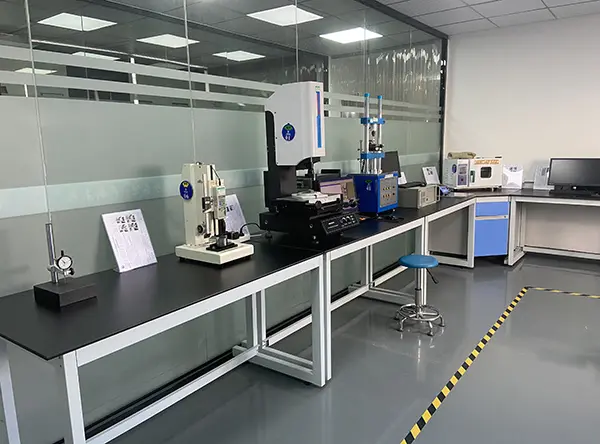
Our facility operates under the ISO9001:2015 international quality management standard, using structured testing equipment to maintain consistency across production runs.
We conduct in-process electrical, mechanical, and environmental testing, including contact resistance, insertion force, and salt spray exposure.
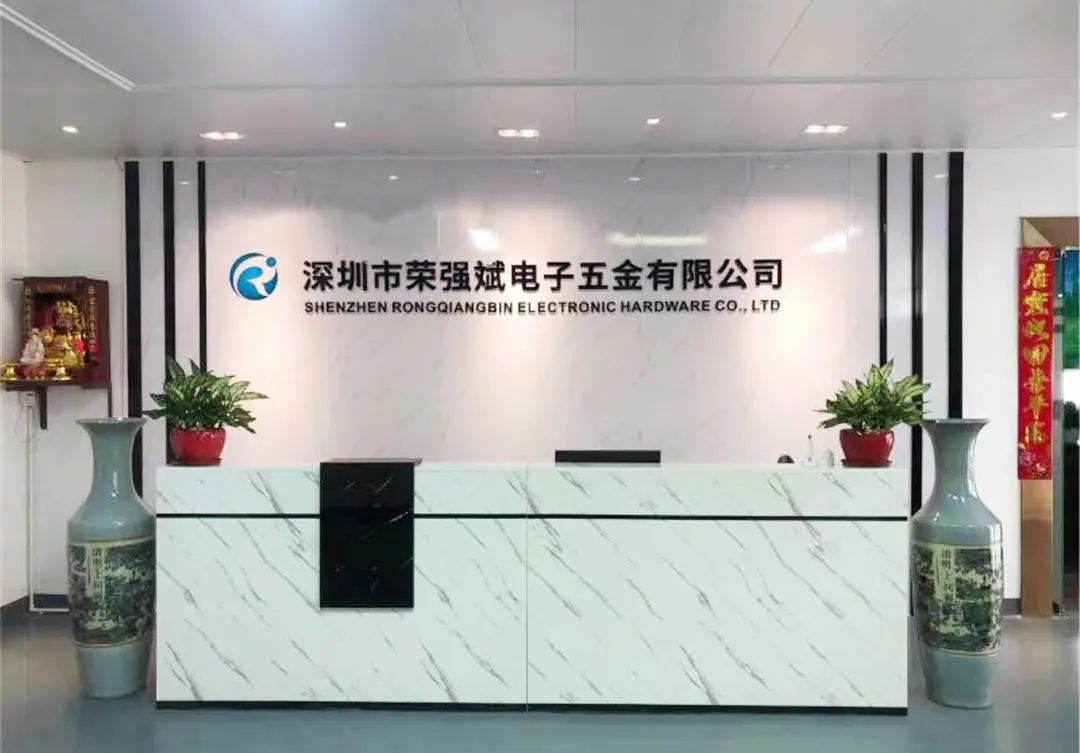
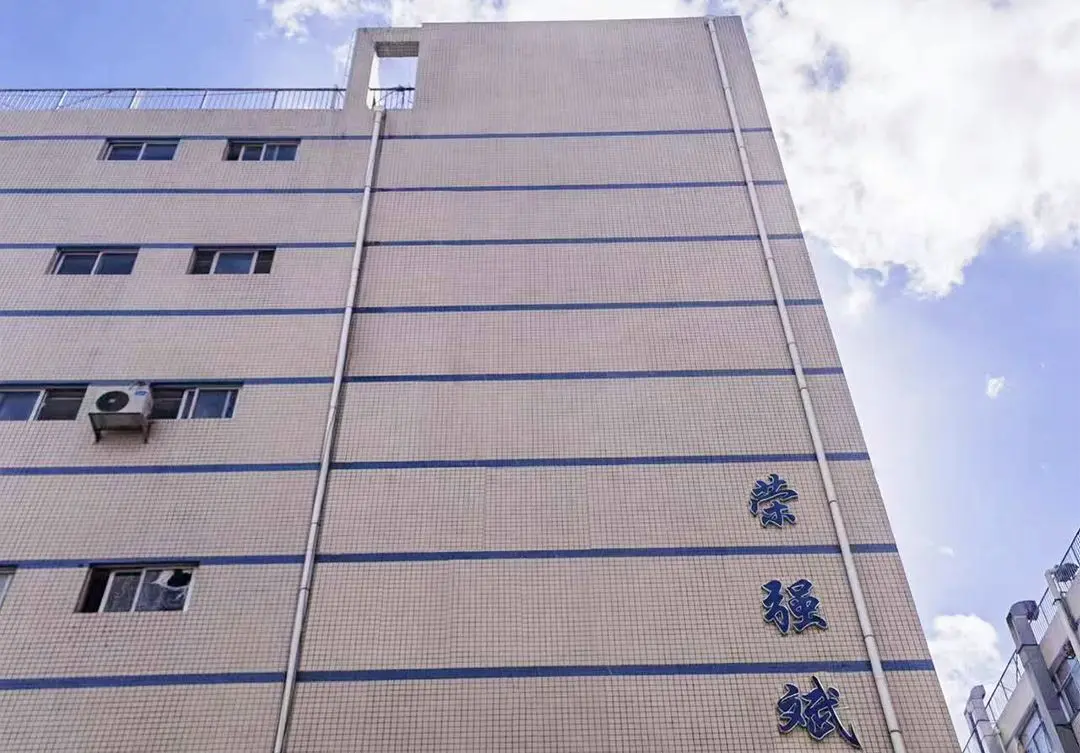
Founded in February 2011 in Songgang Street, Shenzhen, within the Guangdong-Hong Kong-Macao Greater Bay Area, RQB began with a focus on manufacturing high-precision spring contact probes. Over the past decade, we have expanded our design and production capabilities to become a specialist in pogo pin connectors and magnetic cable interfaces.
Our campus supports full product lifecycles, from precision turning, injection molding, and connector assembly to automated packaging. By keeping these operations in-house, we control mechanical tolerances, manage costs, and compress production lead times for custom layouts.
This operational model has allowed us to serve tier-one manufacturing partners globally. Our components are integrated into devices for brands including Honeywell, Samsung, SIEMENS AG, ZTE, 360, QCY, HAYLOU, Shanghai Laimu, Luxshare Group, Aoni Electronics, and the Amphenol Group.
Addressing the key priorities of hardware engineers, strategic buyers, and supply chain managers in connector sourcing.
When selecting a connector manufacturing partner, procurement teams must balance unit costs with long-term reliability. A field failure caused by contact corrosion, contact dropouts, or spring fatigue can lead to product recalls and damage brand reputation. Sourcing strategies focus on several key pillars:
The thickness and makeup of plating layers directly influence contact resistance and wear life. RQB uses high-purity gold plating (ranging from 1 to 50 micro-inches based on requirements) over nickel diffusion barriers. This configuration helps prevent base metal oxidation while maintaining low electrical resistance over thousands of cycles.
Engineers must balance insertion force against mechanical stability. In magnetic connectors, we model the magnetic flux fields using finite element analysis (FEA) to achieve self-aligning mating forces that disconnect safely without damaging the circuit board interface.
Devices exposed to outdoor, industrial, or wearable environments require protection from dust and water. We integrate elastomeric O-rings and use structural overmolding to design connector sub-assemblies that meet IPX7 and IPX8 standards, maintaining performance under immersion.
To address these demands, RQB operates a quality control system that includes automated optical inspection (AOI), X-ray plating thickness verification, mechanical force-deflection profiling, and multi-gas corrosion testing. This allows us to deliver consistent components, reducing incoming inspection overhead for our clients.
Providing specialized connection technologies across consumer, medical, automotive, and industrial applications.
Supporting miniaturized form factors, sweat-resistant plating, and magnetic self-mating connections for TWS earphones, smartwatches, and fitness trackers.
Designing robust spring-loaded pins for rugged handheld terminals, data cradles, test fixtures, and automated logistics machinery.
Producing biocompatible, low-resistance interfaces for wearable patient monitors, clinical probes, and disposable diagnostic cartridges.
With the expansion of battery-powered systems, there is a growing need for connectors that handle high-current loads within compact spaces. Traditional pogo pins are limited by the thermal capacity of their internal springs, which can overheat when carrying currents above 2 Amps.
RQB has developed specialized high-current pogo pins that bypass the spring's electrical path using insulated internal ball architectures or direct plunger-barrel contact designs. These structural modifications enable individual pins to carry continuous currents from 5A up to 30A with minimal thermal rise. This performance makes them suitable for quick-charge docks, light electric vehicle (LEV) battery interfaces, and high-load industrial systems.
Developing micro-pogo pins with ultra-fine diameters to meet the routing densities of high-density PCB layouts and sub-millimeter component assemblies.
Deploying specialized plating systems, such as palladium-nickel over gold, to improve resistance to sweat, skin oil, and electrochemical corrosion in wearable electronics.
Engineering impedance-controlled pogo pin arrays (typically 50-ohm and 90-ohm differential pairs) to support USB4, PCIe Gen 5, and RF signal transmissions up to 20 GHz without signal degradation.
Modern connector design relies heavily on material science. The selection of copper alloys, spring materials, and polymers directly determines a connector's reliability and operational life. RQB works with qualified raw material suppliers to ensure all inputs meet strict specifications:
Ensuring environmental responsibility, supply chain compliance, and international manufacturing standards.
Global markets require compliance with strict environmental directives. RQB manages its supply chain to ensure all components comply with international requirements, including RoHS 3.0 (Directive 2015/863/EU) and REACH (EC 1907/2006) regulations.
We perform regular testing for hazardous substances, such as lead, cadmium, mercury, hexavalent chromium, polybrominated biphenyls (PBB), and phthalates. By sourcing raw materials from verified vendors and conducting regular material assays, we help our clients maintain compliant supply chains for international markets.
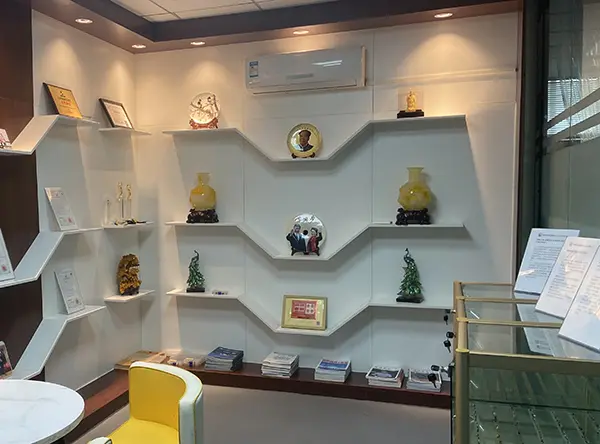
We maintain an open-door policy for factory audits by qualified third-party inspectors and client procurement teams. Our manufacturing processes, quality control tracking, and worker safety protocols are structured to meet global industrial standards. This transparent framework allows us to maintain long-term partnerships with leading companies like Honeywell, Samsung, and Siemens.
Expert insights on electrical performance, mechanical design, and application-specific custom connector solutions.
Wearable devices are continuously exposed to sweat, lotion, and ambient humidity, which can accelerate galvanic corrosion. RQB addresses this by using multi-layer electroplating configurations. We apply a dense nickel or sulfamate nickel barrier layer over the brass substrate to prevent alloy migration. On top of this, we deposit a layer of hard gold (up to 50 micro-inches thick, depending on requirements) or a specialized palladium-nickel (Pd-Ni) alloy. This setup provides a durable contact interface that resists electrochemical breakdown and degradation.
Standard pogo pins route current through the internal coil spring, which has high electrical resistance and can overheat at currents above 2 Amps. For high-current applications, RQB uses modified internal architectures. By introducing a bias-cut plunger with an internal insulation ball, or using a hollow plunger with a dedicated internal conduction sleeve, we ensure the plunger maintains continuous contact with the inner barrel wall. This design bypasses the spring's electrical path, reducing contact resistance to less than 10-20 mΩ and preventing excessive temperature rise at high currents.
To achieve reliable ingress protection, RQB utilizes insert molding and custom elastomeric seals. We place the turned pins directly into the injection mold, sealing the interface between the plastic housing and the metal pins at a molecular level. For configurations with moving pins, we integrate precise O-rings or liquid silicone rubber (LSR) seals. These sub-assemblies undergo automated leak testing using pressure differential methods to ensure they meet IPX7 (immersion up to 1 meter for 30 minutes) or IPX8 (deeper, continuous immersion) standards.
The mechanical lifespan of a pogo pin connector depends on its stroke length, spring force, and operating environment. RQB connectors are designed to achieve a standard lifespan of 50,000 to 100,000 mating cycles. For high-durability applications, we optimize the internal spring design, control the surface finish of the sliding components, and apply wear-resistant plating. This allows us to manufacture components that sustain up to 1,000,000 cycles while maintaining stable electrical contact resistance.
We use precision Swiss CNC lathes and automated machining centers to turn our metal parts, maintaining tolerances within ±0.01mm on critical dimensions. Our injection molding systems use high-grade steel tooling to keep plastic part dimensions consistent. During assembly, automated optical inspection (AOI) systems verify pin height, coplanarity, and alignment in real-time, helping to prevent defective parts from reaching our clients' production lines.
Yes, we provide end-to-end ODM and OEM services for magnetic connection systems. Our engineering team designs the magnetic alignment array, calculates the required mating and separation forces, and designs the overmolded cable assembly. We offer complete solutions that integrate charging, USB data transfer, and custom keying to prevent incorrect mating.
Pogo pin connectors perform well in high-vibration environments because the spring maintains continuous contact pressure. We customize the spring force (typically between 30g and 150g depending on the pin diameter) to prevent transient electrical opens (contact bounce) during vibration. We verify this performance by testing our connectors on vibration tables that simulate transportation and operating conditions.
For standard designs, we can supply samples within 3 to 5 business days. Custom designs requiring new turning profiles or molded housings typically take 2 to 3 weeks for tooling and prototyping. Once prototypes are approved, standard mass production runs are completed within 3 to 4 weeks, depending on the order volume and material requirements.
Proudly supplying precision components to leading global brands and contract manufacturers.
Explore our additional range of specialized spring-loaded probes, magnetic cables, and custom hardware assemblies.
 Rongqiangbin Electronic