ODM High Current Contact Factory & Factories

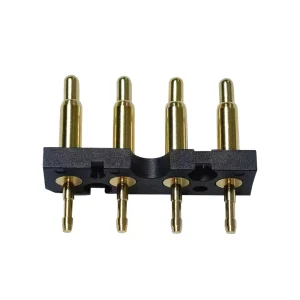
Custom High-Current Connectors, Pogo Pins, and Magnetic Charging Interfaces Engineered for Advanced Electrical Power Transmission and Peak Reliability.

1. Industry Overview: The Transition to High-Current Interfaces

In modern electronic design, systems demand ever-higher power delivery configurations packaged inside smaller physical envelopes. Standard contacts and pogo pin interconnects historically engineered for signal transmission (typically rated under 1A to 2A) fail prematurely when loaded with the demands of rapid-charging networks, industrial automation motors, and high-performance battery banks. This challenge has driven global OEMs to seek specialized ODM high current contact factories capable of engineering components that handle sustained high currents—ranging from 5A up to 50A and beyond—without thermal failure.

High-current contacts must satisfy stringent electrical and mechanical requirements. By partnering with dedicated manufacturers, design engineers can customize internal plunger architectures, tailor proprietary metal plating configurations (such as Palladium-Nickel or heavy Gold coatings), and optimize thermal dissipation pathways. As modern machinery, electric vehicles (EVs), medical devices, and high-tier smart-home appliances transition to rapid-energy delivery modes, custom-designed electrical contacts act as critical pillars preventing device-level voltage drops, contact resistance spikes, and severe thermal runaway events.

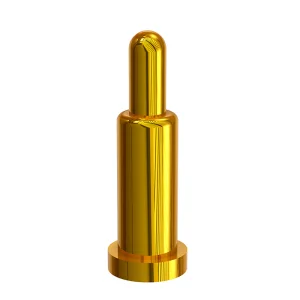
Information Gain Indicator: Traditional off-the-shelf connectors rely on standardized brass designs. However, custom high-current contacts feature optimized geometries, customized spring materials (like Beryllium Copper), and advanced ball-point structure technologies that maintain a continuous electrical path, bypassing standard spring-only limits.

2. Technical Deep-Dive: Mechanical Design & Material Science

Designing a contact system that safely facilitates significant amperage requires deep expertise in mechanical architecture, tribology, and metallurgy. When current passes through a contact interface, microscopic irregularities (constriction zones) concentrate the flow of electrons, raising the localized temperature.

Choosing the Right Base Alloys and Plating

The selection of raw materials is the first line of defense against electrical resistance. High-current plungers and barrels are usually machined from premium brass (C3604) or tellurium copper (C14500), the latter offering up to 93% IACS (International Annealed Copper Standard) conductivity. To ensure constant, low-resistance contact over millions of compression cycles, the internal springs are manufactured using Beryllium Copper (BeCu) or Stainless Steel (SUS302), engineered to withstand high working temperatures without experiencing stress relaxation.

Material Type Electrical Conductivity (% IACS) Max Continuous Temp Primary Application Area
C3604 Brass 26% 125°C Standard Signal & Moderate Power Contacts (<5A)
C14500 Tellurium Copper 93% 200°C Ultra High-Current Paths & Fast Charging Plungers (>15A)
Beryllium Copper (C17200) 20 - 38% (heat-treated) 180°C Heavy-Duty Springs & Integrated Plunger Interfaces

Plunger Structure Optimization

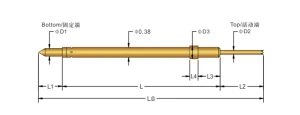
Standard spring probes allow current to flow through the high-resistance steel spring, which can heat the spring beyond its annealing point, leading to contact failure. High-current pogo pins utilize specialized architectural variations to mitigate this risk:

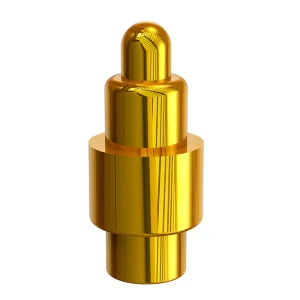
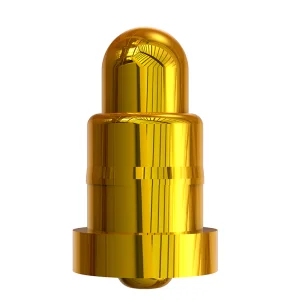
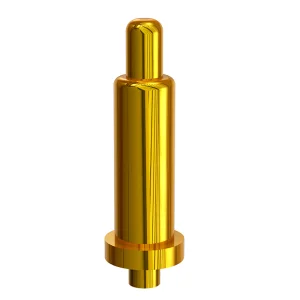
  • Biased Ball Design: An internal insulated ruby or conductive stainless steel ball is positioned between the plunger and the spring. This pushes the plunger offset against the barrel's inner wall, establishing a direct, stable path for the electrical current and bypassing the spring.
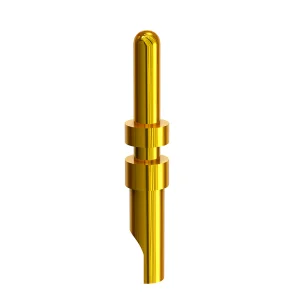
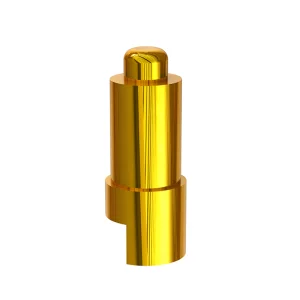
  • Back-Drill & Taper Design: The end of the plunger is hollowed out or cut at an angle. This ensures constant lateral force against the barrel wall, drastically reducing overall contact resistance to under 10mΩ.
  • Multi-contact Claws (Crown Band/Hyperboloid): Multi-point contacts are incorporated within the female sleeve to maximize contact area, distributing high current densities across numerous contact paths.

Low Contact Resistance

Advanced structural geometries keep contact resistance below 10-20 mΩ, limiting energy losses and preventing localized overheating during operation.

Excellent Thermal Stability

Advanced material selection allows components to operate within a tight heat-rise profile (ΔT < 30°C) even under continuous peak-current loads.

High Mating Cycle Lifespans

Specialized plating materials resist mechanical wear and corrosion, maintaining consistent connection performance for up to 100,000+ mating cycles.

3. Global Procurement Trends & Industrial Challenges

The international supply chain is shifting towards vertical integration and localized compliance verification. Global procurement directors in North America, Europe, and Asia-Pacific face several challenges when sourcing high-current contacts:

  • Thermal Safety Compliance: Hardware designs must meet strict international standards, including UL 1977 (safety standard for component connectors) and IEC 60512 (testing procedures for electromechanical components).
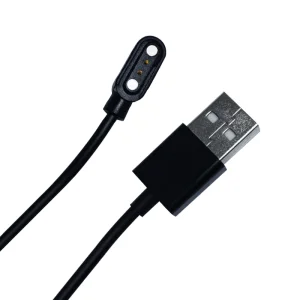
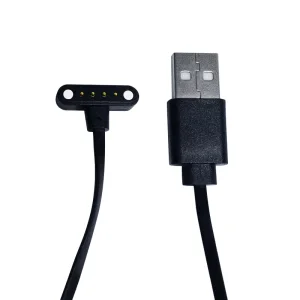
  • Miniaturization Constraints: In consumer wearables and implantable medical technology, connectors must deliver high charging currents (such as 5V/5A quick charge) within thin profiles, without exposing users to high surface temperatures.
  • Harsh Environment Protection: Applications in outdoor telecom, marine systems, and industrial plants require contacts that resist vibration, dust, and moisture (IP67/IP68 rating), and offer robust protection against galvanic corrosion.

To manage these challenges, sourcing teams are bypassing intermediaries to collaborate directly with ODM high current contact factories. This approach provides direct access to the factory's raw material sourcing channels, automated testing laboratories, and engineering teams, accelerating time-to-market while reducing design and manufacturing risks.

About Us: Shenzhen Rongqiangbin Electronic Hardware Co., Ltd.

A premier Chinese high-precision connector factory powering global tech leaders since 2011

Established in February 2011 and situated in Songgang Street, Shenzhen—at the heart of the Guangdong-Hong Kong-Macao Greater Bay Area—Shenzhen Rongqiangbin Electronic Hardware Co., Ltd. has grown into a leading manufacturer of high-current pogo pins, spring-loaded connectors, magnetic interfaces, and precision metal hardware.

Over more than a decade of research, development, and high-volume manufacturing, we have built a comprehensive production facility designed to meet the quality, delivery, and pricing needs of domestic and international markets. RQB maintains a strong commitment to quality and engineering integrity. Our production and quality control systems are certified to the ISO9001:2015 international quality management standard, ensuring that every product we deliver meets all environmental and safety requirements.
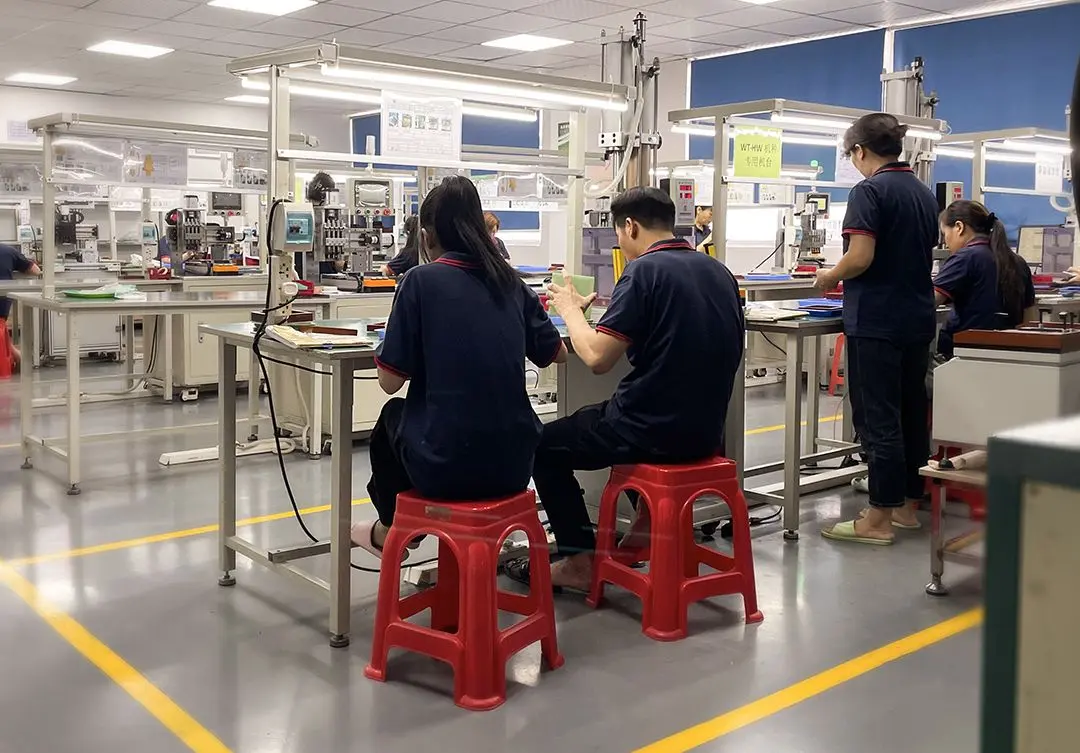
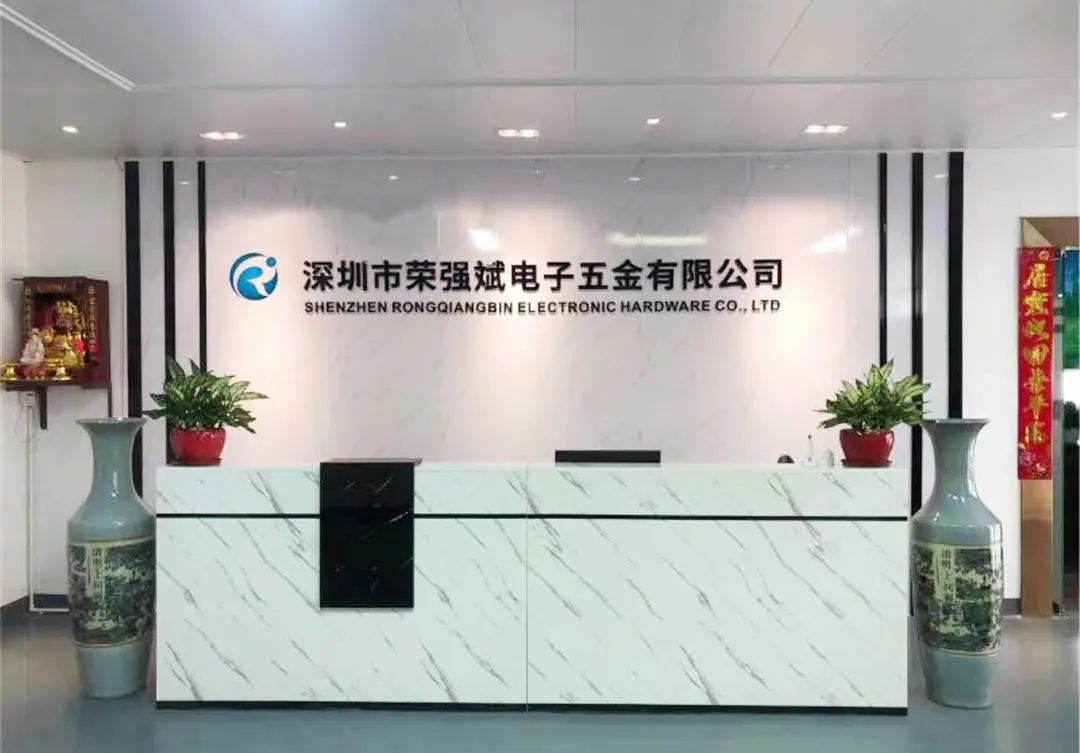
Rongqiangbin Factory Facility and Assembly Line
Precision Automatic Lathes and Machining Shop
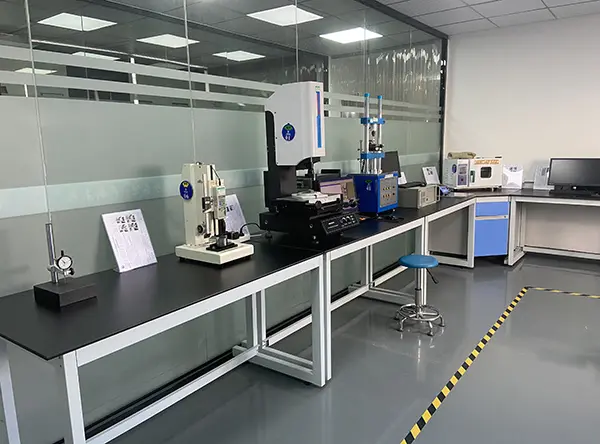
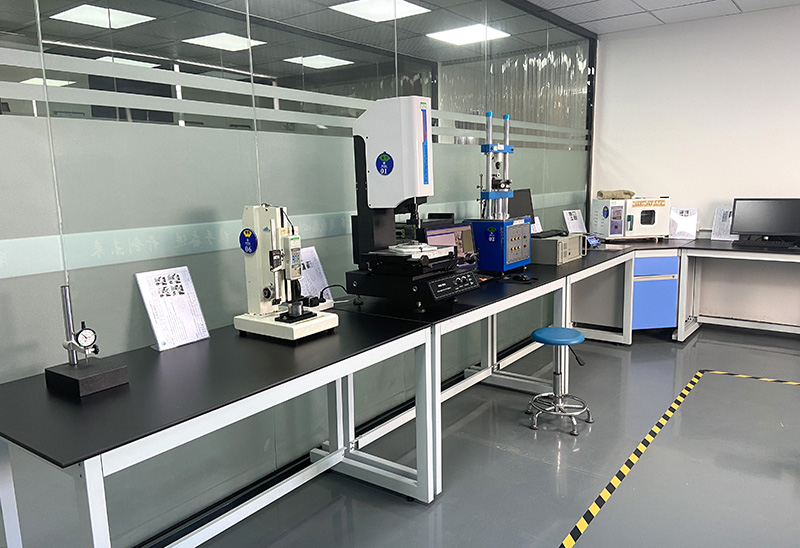
QC Inspection Lab & Durability Testing Equipment

Why Choose Us

10+
Years Manufacturing Experience
4000+
Global Enterprise Clients
300+
Patented Designs & Tech Solutions
100%
QC Inspection Before Shipping
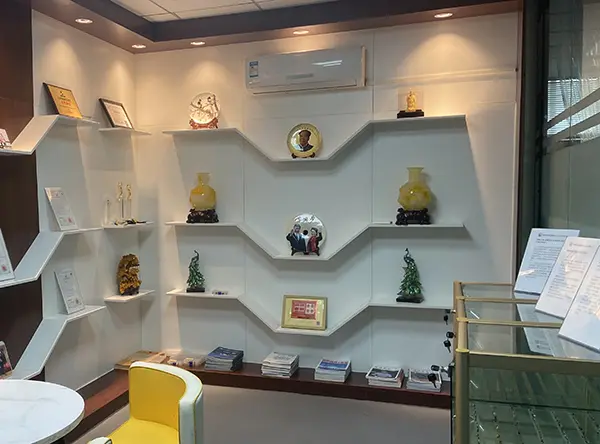
Rongqiangbin Certification 1 Rongqiangbin Certification 2

Our Vision: Committed to being an excellent POGO PIN manufacturer for both quality and cost in domestic and international markets, while leading connector technology development.

Corporate Partnerships and Supply Chain Audits

Guided by our core principle of "customer first, integrity first," RQB has built a strong engineering team and established long-term cooperative partnerships with some of the world's most recognizable brands and tier-one OEM assembly groups. Our primary customers include:

Honeywell
Samsung
SIEMENS AG
ZTE
360
QCY
HAYLOU
Shanghai Laimu
Luxshare Group
Aoni Electronics
Amphenol Group
Rongqiangbin Logo Showcase
Rongqiangbin Registered Trademark Logo
RONGQIANGBIN

4. Macro Solutions: Custom ODM Project Workflow

Building custom high-current contacts requires a structured, multi-phase engineering process. A typical project lifecycle at our advanced manufacturing plant follows a defined path:

Phase 1: Finite Element Analysis (FEA) Simulation Before manufacturing tooling, we run thermal simulations (T-Rise curves) and structural analyses to predict electrical and mechanical performance under simulated load conditions.
Phase 2: Precision CNC Turning and Plating Our production facilities use high-precision CNC machines to maintain tight dimensional tolerances (±0.005mm). We then apply custom nickel, gold, or palladium-nickel electroplating layers.
Phase 3: Automated Assembly and 100% Quality Assurance We use automated assembly machines to join the plunger, spring, and barrel. Key properties like contact resistance, spring force, and height are tested and verified before shipment.

5. Future Technical Roadmap for High Current Interfaces

As industry requirements evolve, several technologies are shaping the future of high-current connect systems:

  • Smart Connected Pins: Embedded sensor elements capable of real-time monitoring of local contact temperature and resistance. This allows industrial systems to detect potential wear before a failure occurs.
  • Advanced Coatings: Transitioning away from pure gold plating to complex multilayer alloys like Palladium-Gold (Pd-Au) and Graphene-enhanced coatings. These alternatives reduce friction coefficients, improve wear resistance, and maintain electrical stability under high temperatures.
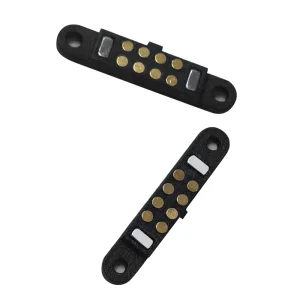
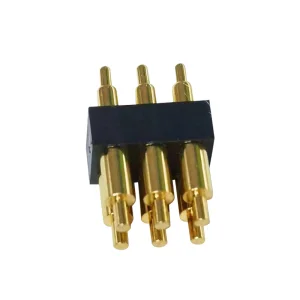
  • Automated Fast-Charging Interfaces: Integrated high-current pogo arrays designed to support rapid-charging systems (up to 100A+) for light electric vehicles, robotic charging docks, and drone landing pads.

Frequently Asked Questions

Direct answers from our engineering team regarding high-current contact design and manufacturing

What defines a pogo pin as "high current" compared to a standard contact?
Standard pogo pins are designed for low-power signal lines and typically handle currents under 2A. A "high current" pogo pin is engineered to carry currents from 5A to over 50A. They achieve this through mechanical structures (like biased plungers or internal insulated balls) that direct the current path away from the spring, as well as high-conductivity copper alloys (e.g., Tellurium Copper) and thicker plating layers.
Why is the internal spring not used as the main current-carrying path?
Springs are typically made from stainless steel or music wire, which have high electrical resistance. If high current flows through the spring, it will generate heat, eventually exceeding the annealing temperature of the metal. This causes the spring to lose its elasticity and leads to mechanical and electrical failure of the contact.
How does Shenzhen Rongqiangbin (RQB) verify the performance of custom parts?
Our ISO9001:2015 facility utilizes automated testing stations to measure dynamic contact resistance, spring force profiles, stroke life cycles, and temperature rise (T-Rise) curves, ensuring all parts comply with project specifications prior to packaging.
What plating options are best for high-humidity or marine applications?
For harsh environments, we recommend a robust nickel underplate with a thicker hard gold plating layer. In marine or high-moisture conditions, we can apply advanced multi-layer coatings, such as Palladium-Nickel (Pd-Ni) with a gold flash, to resist wear and prevent galvanic corrosion.
Does your factory provide compliance documentation like RoHS and REACH?
Yes. All raw materials and surface plating chemical configurations used by Shenzhen Rongqiangbin are fully compliant with RoHS and REACH standards. We can provide full certification documents for external customer audits.
What is the typical tooling and production lead time for an ODM project?
Engineering drawings and FEA simulations are typically ready within 3 to 5 business days. Once the design is approved, physical prototyping takes 1 to 2 weeks, followed by mass production and shipment in 2 to 3 weeks depending on the order volume.